 Cedar Biblical
Hebrew Scripture Studies · 7 min read
The Crimson Worm in Psalm 22:6: From Crimson to Glory
What is the crimson worm (tola'ath) of Psalm 22:6? A careful study of “I am a worm,” the ancient scarlet dye, and the movement from Christ's suffering to resurrection glory and cleansing as white as snow.
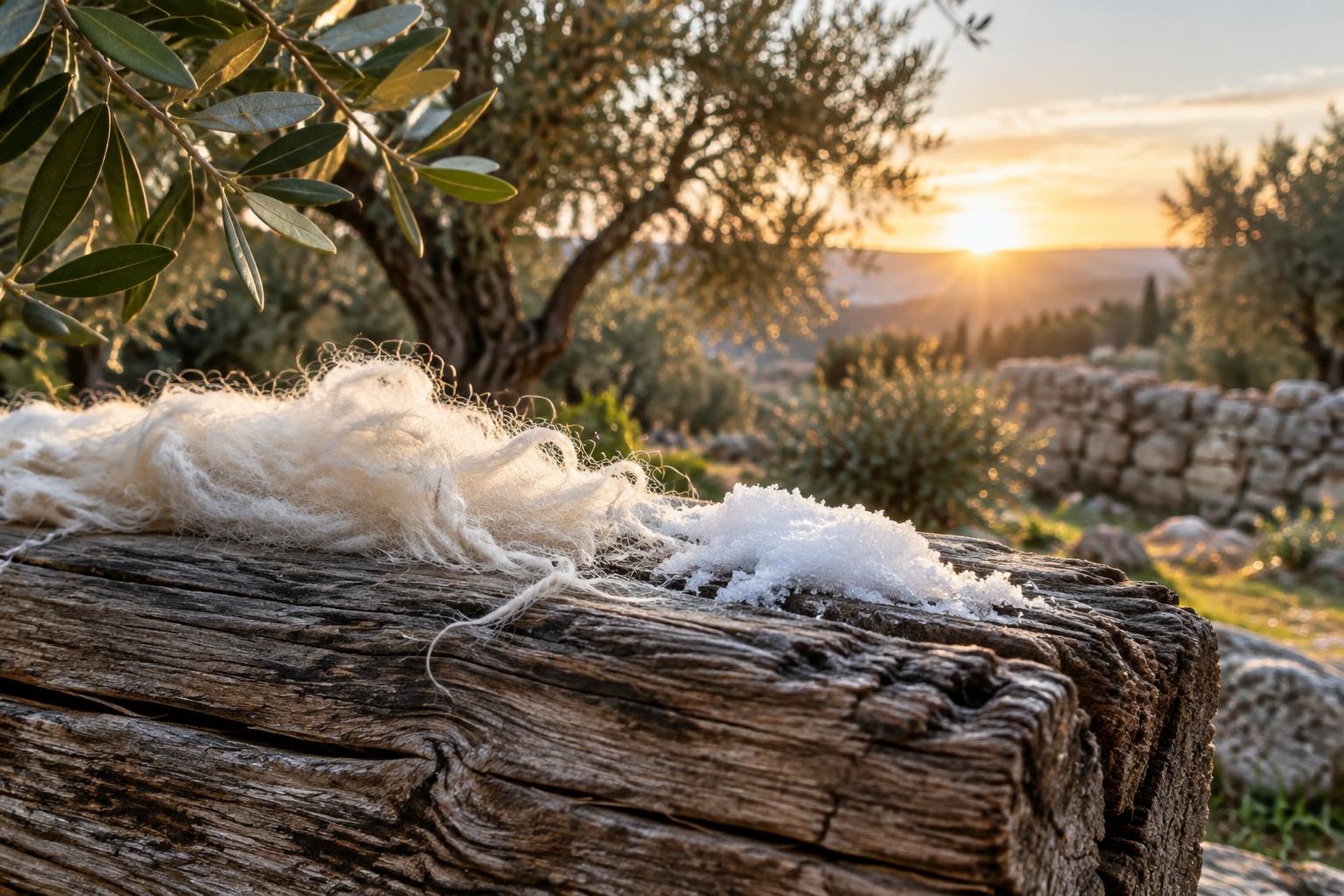
“But I am a worm, and no man; a reproach of men, and despised of the people” (Psalm 22:6, KJV). How can this humiliation point to the Lord of glory? Read beside the Gospels, the psalm leads us through suffering toward answered prayer and praise. The crimson insect offers a devotional illustration, but the gospel does not depend on an unverified story about its life cycle.
Psalm 22:6: Why Does the Psalm Say “I Am a Worm”?
Psalm 22 bears David's name but does not identify the particular occasion of its composition. “I am a worm” expresses humiliation, not a literal transformation into an insect.
Jesus quotes Psalm 22:1 on the cross (Matthew 27:46). The mockery echoes verses 7–8, and John 19:23–24 connects the division of His garments with verse 18. The Gospels do not record Jesus directly saying “I am a worm.” Christians read verse 6 prophetically in relation to His suffering because the passion narratives repeatedly draw upon this psalm.
What Is the Crimson Worm in the Bible? Tola'ath and the Scarlet Thread
Tola'ath (תּוֹלַעַת), translated “worm,” belongs to a Hebrew word family also associated with scarlet or crimson. Rimmah commonly describes worms or maggots, especially in decay. This distinction does not prove that Psalm 22 identifies one exact insect species.
Devotional accounts often mention Coccus ilicis or Kermes ilicis. Kermes are oak-associated scale insects, not long earthworms. Related species also occur in scarlet-dye history. Scripture supplies no Latin species name. The scarlet textiles of Exodus 26:1 invite Christian reflection on redemption, but the verse itself does not explain an insect's life cycle.
Is the Crimson Worm Story Real? Crimson on the Wood
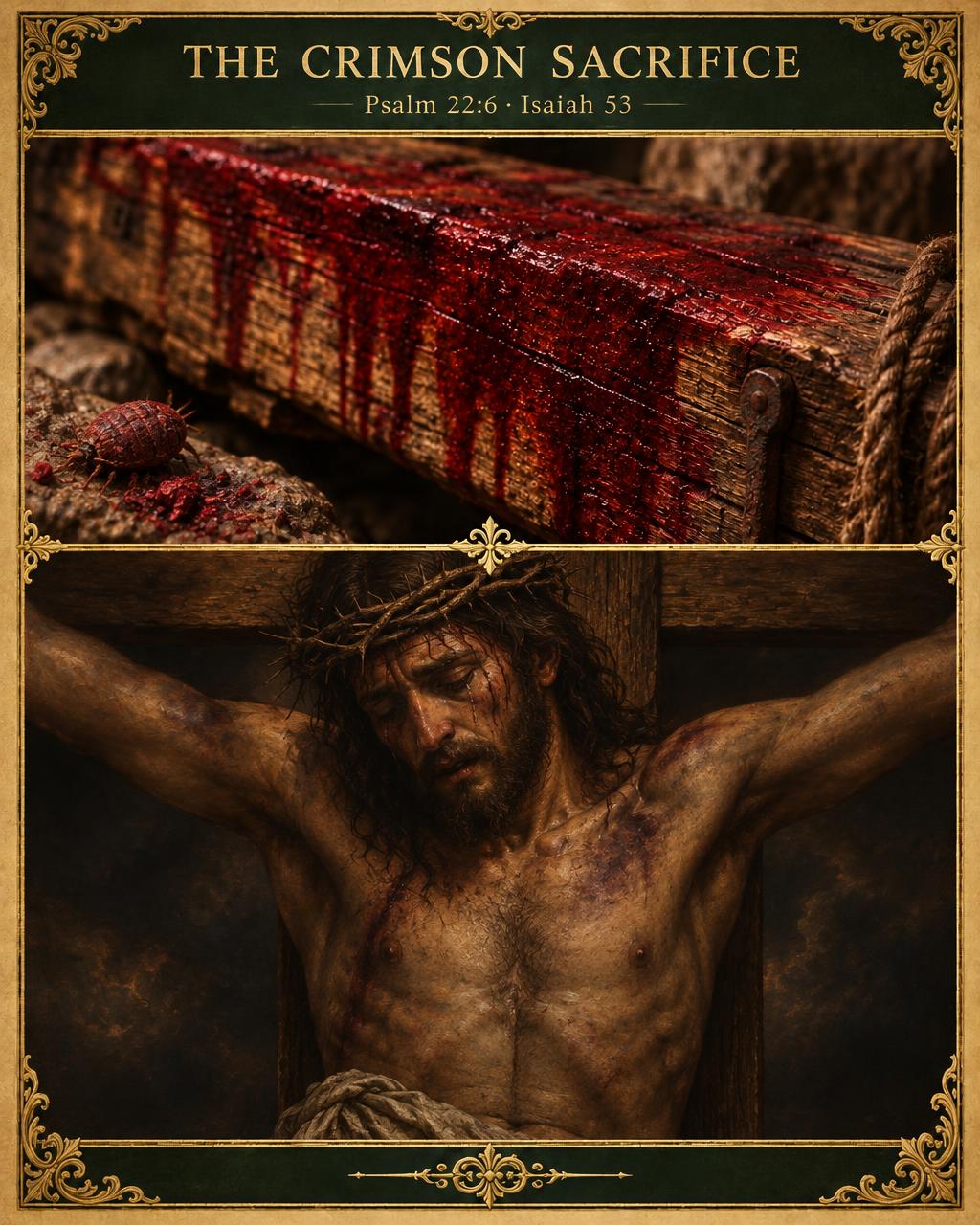
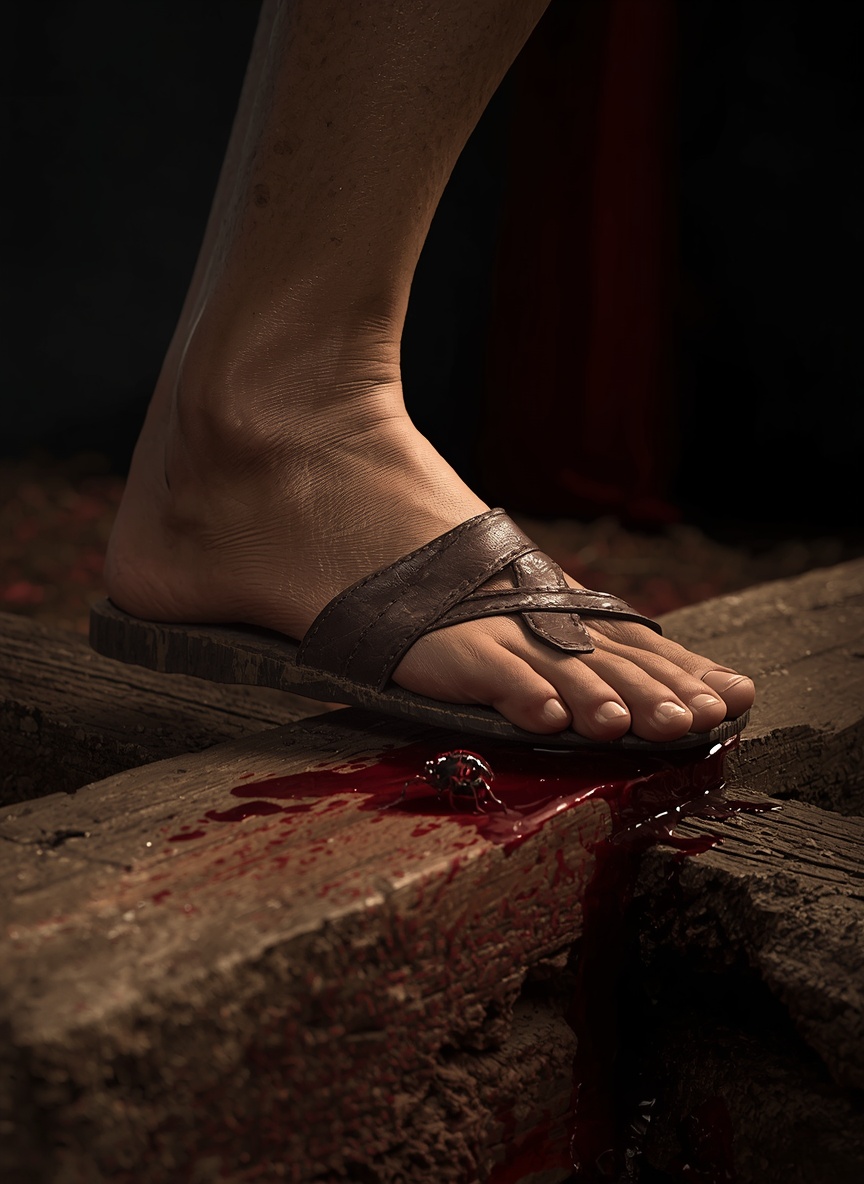
Harvested scale insects supplied red dye. Our scarlet-stained wood is symbolic artwork, not a photograph of natural insect secretions. The sandal likewise pictures contempt, not a particular historical injury to Jesus.
Isaiah 53:5 speaks of His wounds for our transgressions. First Peter 2:24 says He bore our sins in His own body on the tree. His death was real and costly, His self-giving willing (John 10:17–18). The despised One gives His life for our salvation.
Snow White: Cleansing and Resurrection Glory
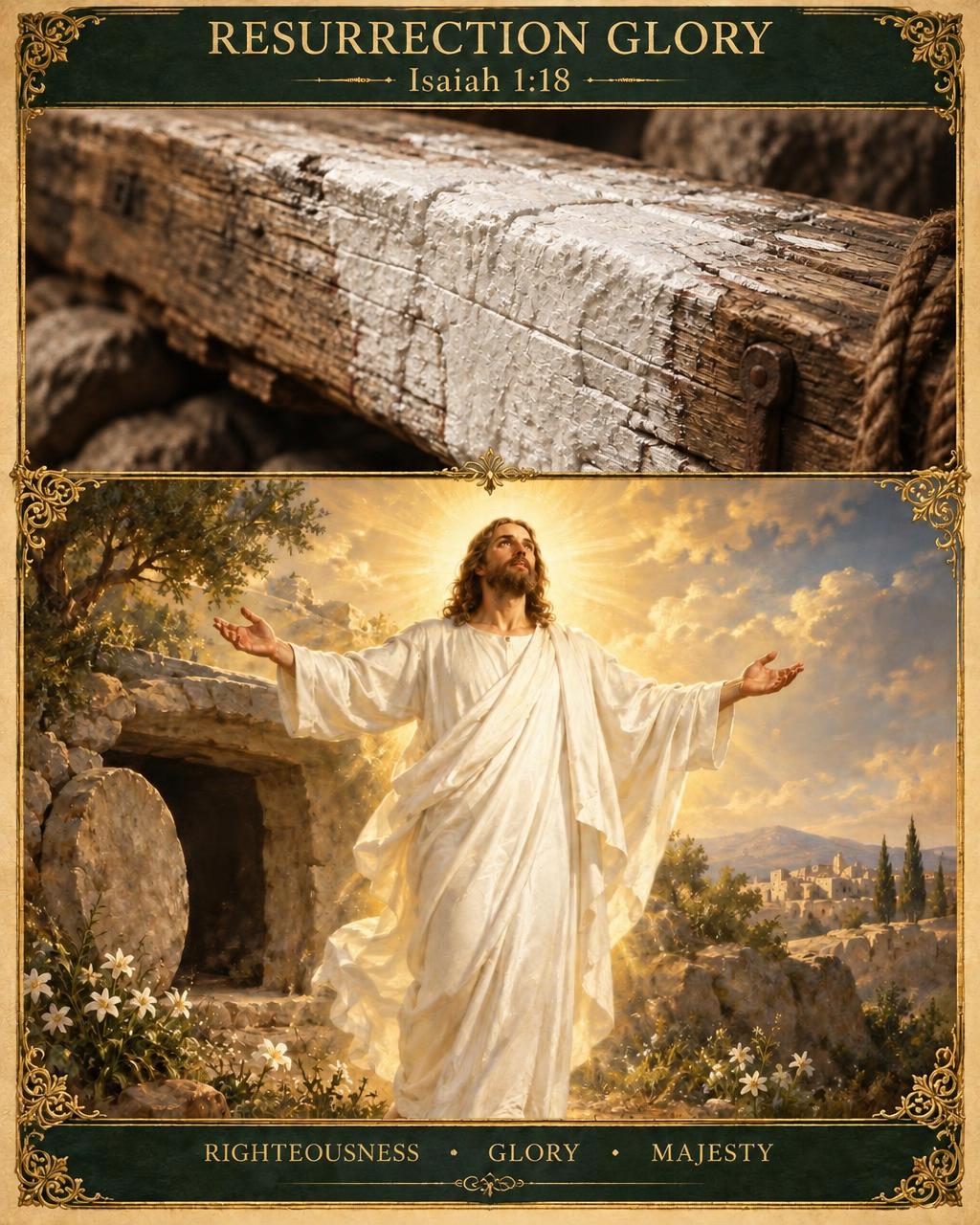
Isaiah 1:18 promises that sins like scarlet shall become as white as snow, and crimson as wool. Red becoming white describes God's cleansing promise, not an insect changing colour.
Popular accounts say a mother insect dies to feed her young and turns white after three days. Reliable biological evidence for that precise story has not been established here, so we do not present it as fact. Christ's resurrection on the third day rests on the apostolic testimony (1 Corinthians 15:3–4), not on that claim.
Snow-white imagery can nevertheless express resurrection glory devotionally. At the Transfiguration, Jesus' clothing became dazzling white (Mark 9:2–3); Revelation 1:14 describes His head and hair as white wool, as snow. Neither passage describes an insect transformation. Together with Isaiah's promise, they give our dawn illustration its scriptural vocabulary of purity and glory.
The Glory That Follows Suffering
Psalm 22 does not end with humiliation. The sufferer declares God's name to the congregation (verse 22), and the nations are called to worship (verses 27–28). Hebrews 2:12 places verse 22 on Christ's lips. The One mocked and rejected becomes the One who gathers His brothers and sisters in praise.
Let the crimson wood move us to gratitude for His sacrifice, and the snow-white dawn to confidence in His cleansing and victory. Our hope is not a hidden biological miracle: it is Jesus Christ, crucified and risen.
Sources for Further Study
Hebrew lexical entry: tola'ath, H8438