 Cedar Biblical
Decoding · 6 min read
The Wilderness Highway: Israel’s Journey and the Seven Churches
From the pillar of fire to the fruit of Eshcol and the end of manna: explore Israel’s wilderness lessons beside Christ’s messages to the seven churches, distinguishing Scripture from prophetic interpretation.
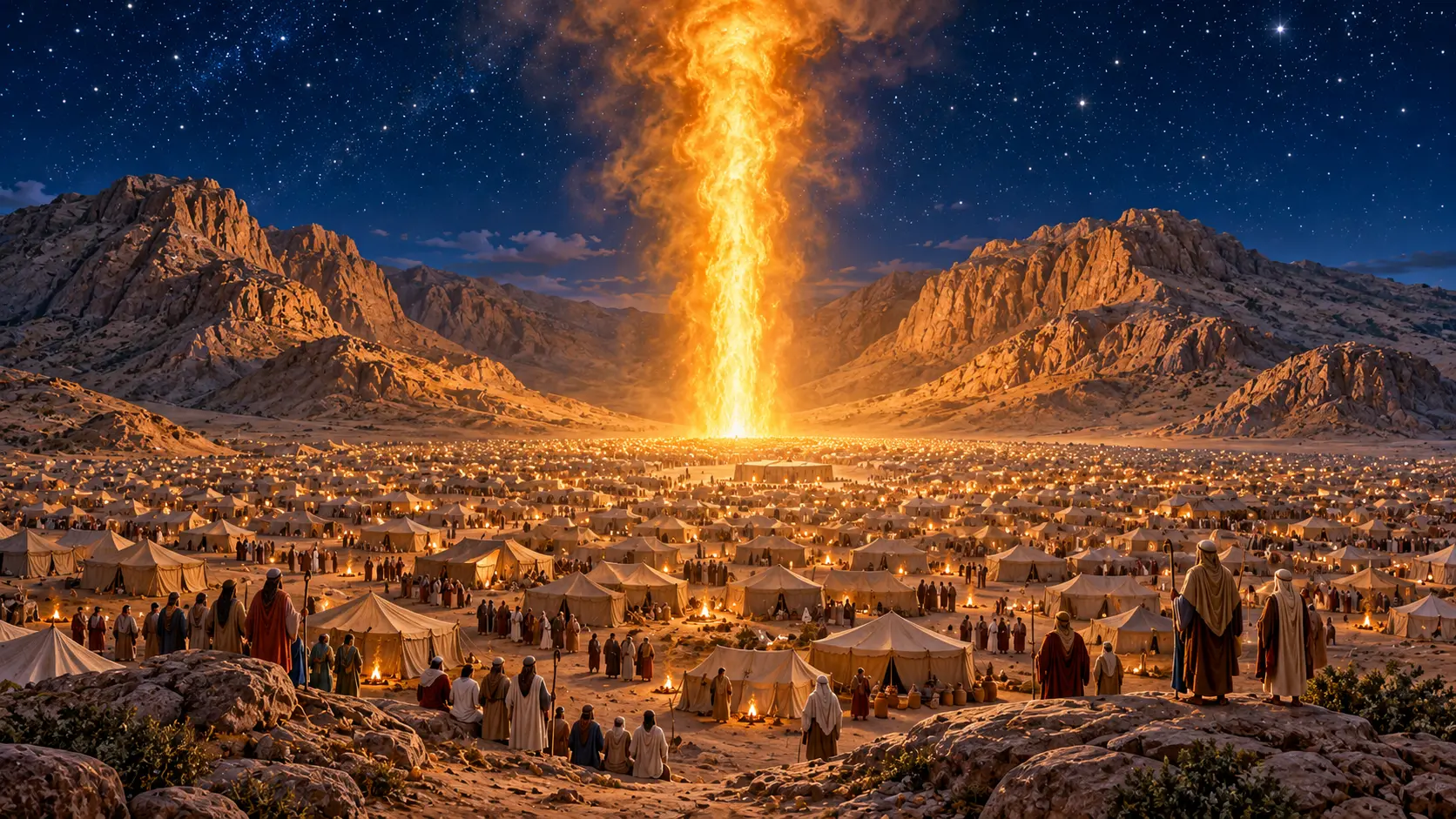
Imagined artwork for the LORD’s guidance by cloud and fire (Exodus 13:21–22); the scale and camp arrangement are not scriptural measurements.
Israel’s road from Egypt to Canaan was more than a journey across the desert. It exposed fear, dependence, rebellion, and the patience of God. Can that road also help us hear Christ’s messages to the seven churches? The connection is fruitful—but we must distinguish biblical events from a proposed prophetic timeline.
One Deliverance, a Long Road
God brings Israel out of bondage, yet does not lead them by the shortest route. He guides them with a pillar of cloud by day and fire by night (Exodus 13:17–22). At the sea, the pursuing army makes escape appear impossible. God opens a way through the waters (Exodus 14).
Leaving Egypt does not mean Israel immediately knows how to trust. Deliverance begins a schooling in dependence. Likewise, a believer’s first confession is the beginning of discipleship, not the end of growth.
Bread, Water, and Daily Trust
At Marah bitter water becomes drinkable; at Elim Israel finds wells and palms (Exodus 15:22–27). In the wilderness God gives manna, with instructions that train His people to gather, obey, and rest (Exodus 16). Moses explains the deeper lesson: man does not live by bread only, but by every word from the LORD (Deuteronomy 8:2–3).
The provision is real, but it does not remove responsibility. Complaining reveals hearts that still look toward Egypt. God’s patience is not permission to treat His gifts as ordinary or His commands as optional.
The Fruit Was Real; So Was the Fear
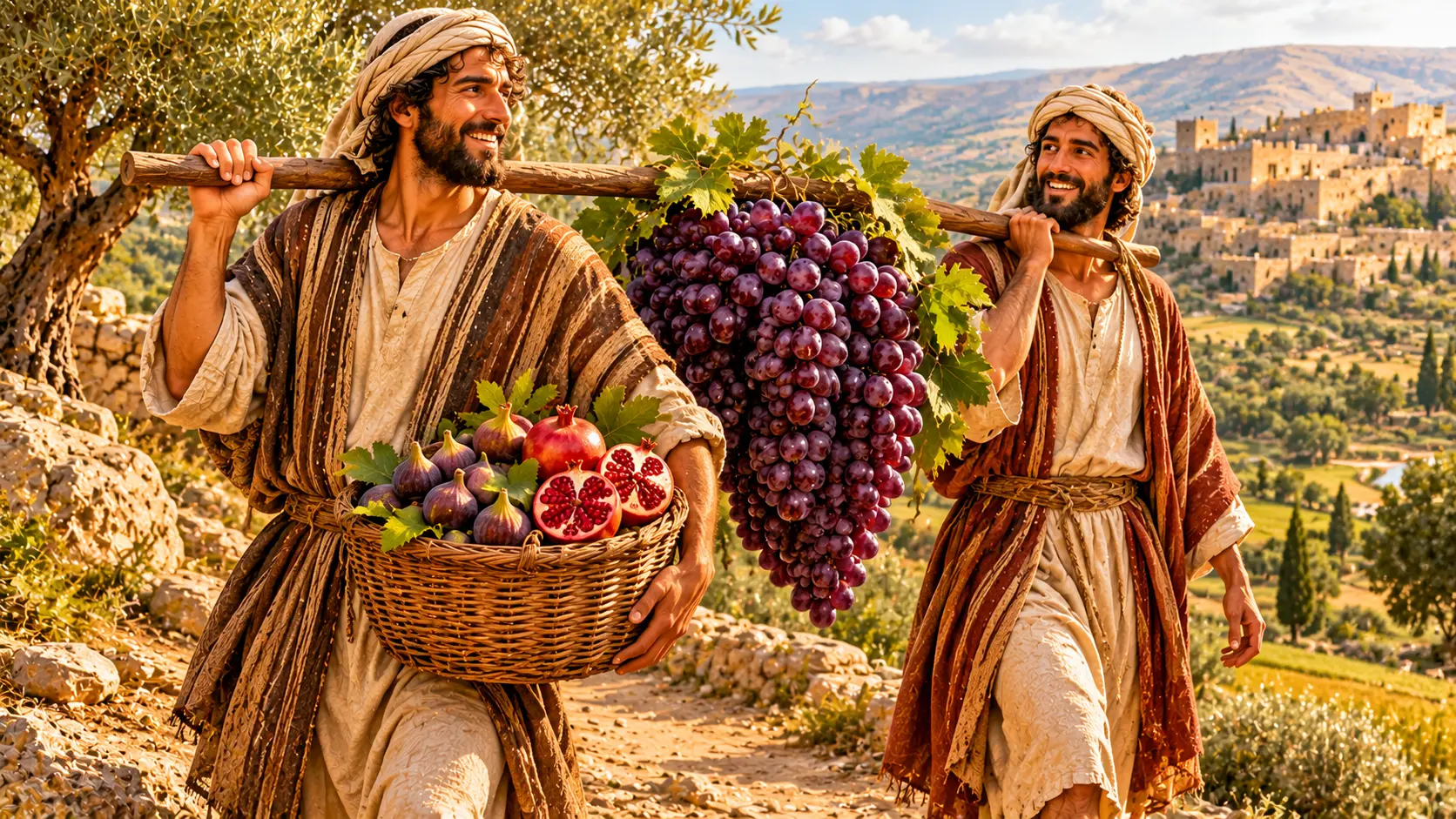
At Eshcol the spies cut one cluster of grapes and carry it between two upon a staff. They also bring pomegranates and figs (Numbers 13:23). All three fruits belong in this scene. Scripture describes the carrying method, not an exact measurement of each grape.
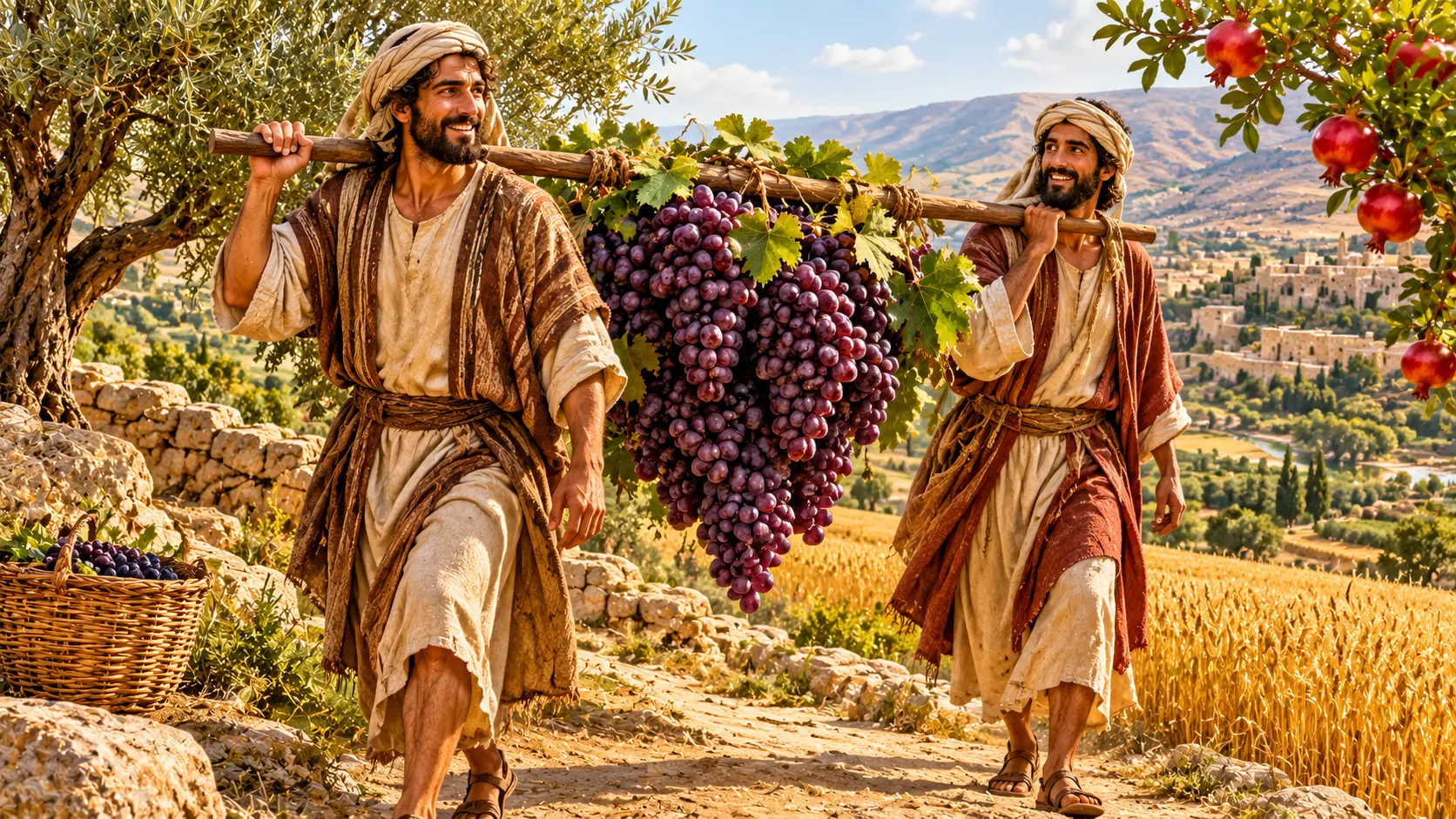
The evidence of abundance does not make the whole company faithful. Most spies emphasize the fortified cities and strong inhabitants. Caleb urges Israel to go forward, but fear overtakes the people (Numbers 13:27–14:10). The obstacle is not the absence of God’s promise; it is their refusal to trust it.
Leadership Must Remain Under God
Jethro counsels Moses to appoint capable men who fear God, love truth, and hate covetousness (Exodus 18:21–22). Leadership requires character as well as organization.
Later, at Meribah, God tells Moses to speak to the rock. Moses strikes it twice. Water comes, but God rebukes Moses and Aaron because they have not believed Him or sanctified Him before Israel (Numbers 20:7–12). Visible results do not automatically vindicate a leader’s actions. The sermon’s warning about pride is an application; God’s stated charge is unbelief and failure to honour His holiness.
Why Paul Tells the Church to Remember
Paul explicitly draws lessons from Israel’s wilderness history (1 Corinthians 10:1–13). Shared privileges did not prevent idolatry, temptation, or murmuring. “Let him that thinketh he standeth take heed lest he fall.” This gives a firm biblical foundation for applying Israel’s journey to Christian discipleship without turning every campsite into a prediction.
Hearing the Seven Churches
Revelation addresses real congregations in Ephesus, Smyrna, Pergamos, Thyatira, Sardis, Philadelphia, and Laodicea (Revelation 2–3). Their messages expose lost love, suffering, compromise, tolerated corruption, spiritual sleep, faithful endurance, and lukewarm self-sufficiency.
The sermon follows a historicist interpretation: these churches also represent successive eras of church history. It connects departure from Egypt with Ephesus, hardship with Smyrna, manna and compromise with Pergamos, corruption with Thyatira, decline and awakening with Sardis, an open door with Philadelphia, and present complacency with Laodicea. Its more specific identifications of institutions and messengers belong to that interpretive framework, not to an explicit explanation supplied by Revelation.
Christ’s repeated call is broader: “He that hath an ear, let him hear what the Spirit saith unto the churches.” Every generation must test itself against every message. Calling ourselves the final period does not prove a date for Christ’s return or that His call to faith has closed.
When the Journey Reached Its Promise
After Israel crosses Jordan, the manna ceases when they eat the produce of the land (Joshua 5:10–12). God has not abandoned them. His provision now comes in a new form. Jericho falls through obedience to His command, not through Israel’s confidence in itself (Joshua 6).
The wilderness teaches dependence; the church messages call for repentance and perseverance. Together they ask: are we merely remembering an old deliverance, or following the Lord who still speaks?
A Prayer for the Road
Father, guide us through fear and testing. Keep our leaders humble, our hearts receptive, and our hope anchored in Your promise rather than speculative dates, in Jesus Name Amen