 Cedar Biblical
Decoding · 4 min read
The Fire and the Ashes: What Remains When Everything Is Given to God?
Why did the priest carefully carry the ashes to a clean place? Explore the burnt offering, divine fire, wholehearted surrender, and Isaiah’s promise of beauty for ashes.

Symbolic artwork recalling beauty for ashes (Isaiah 61:3); the flower and vessel are devotional imagery, not a narrated biblical scene.
An altar burning before the LORD. A priest gathering what remains. A mourner sitting in the dust. Scripture’s ashes carry a message of surrender, sorrow, and restoration. This study concerns sacrificial ashes, not a ruling about modern cremation.
The Offering Given Entirely
In Leviticus 1:3–9, an unblemished animal is presented and consumed upon the altar. The Hebrew term olah is associated with ascending: the offering goes up in smoke. Unlike sacrifices with portions eaten by worshippers, the burnt offering pictures something yielded entirely to God.
When Fire Came from the LORD
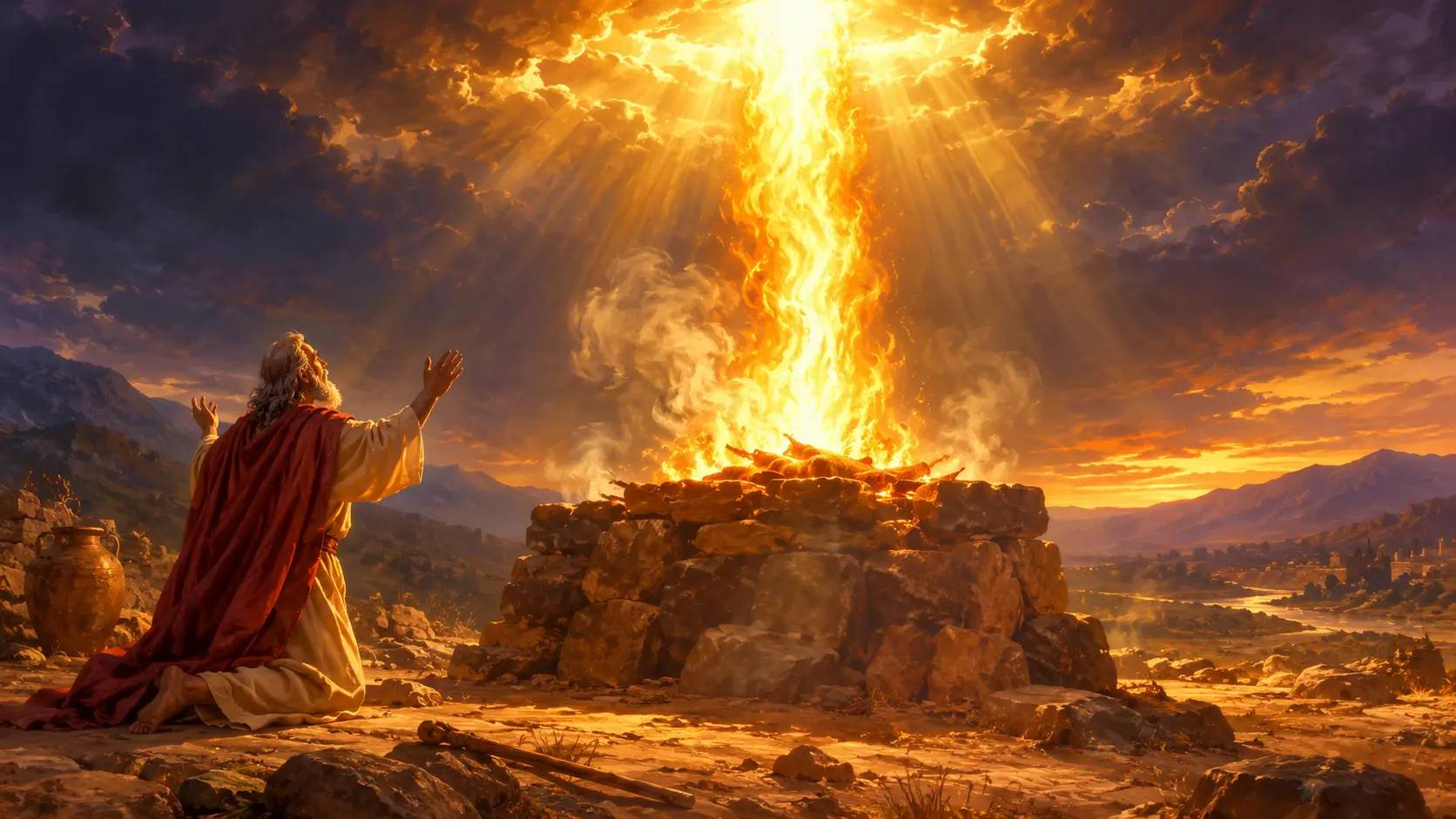
“There came a fire out from before the LORD, and consumed upon the altar the burnt offering and the fat” (Leviticus 9:24). The people shouted and fell upon their faces. Divine fire also accompanies Gideon’s offering, Solomon’s dedication, and Elijah’s prayer (Judges 6:19–24; 2 Chronicles 7:1–3; 1 Kings 18:30–39). These are extraordinary confirmations, not a rule that every accepted sacrifice required a new miracle.
Even the Remains Mattered
Leviticus 6:8–13 directs the priest to wear linen, gather the ashes beside the altar, change garments, and carry them outside the camp to a clean place. The altar fire must remain burning. The small details reveal ordered worship, not careless disposal.
Devotionally, this speaks to service that continues after the dramatic moment. Quiet faithfulness, patient care, and unseen work still belong to a life offered to God.
A Living Sacrifice
Paul calls believers to present their bodies as “a living sacrifice” (Romans 12:1–2). This is grateful consecration, not another atonement. Christ’s offering is sufficient; Hebrews 10:10–14 grounds our hope in His finished work. We surrender because He has redeemed us, not to purchase redemption through suffering.
Why Ashes Also Speak of Grief
Job sits among ashes in his suffering (Job 2:8). The Jews mourn in sackcloth and ashes under a death decree (Esther 4:3). These are not altar scenes. Ashes can signify humiliation and sorrow as well as the remains of sacrifice. Holding these contexts together does not make all suffering a sign of divine rejection—or every painful experience a divinely required offering.
Beauty for Ashes
Isaiah 61:1–3 promises comfort to mourners: “beauty for ashes,” joy for mourning, and praise for heaviness. Jesus reads this chapter at Nazareth (Luke 4:16–21), announcing good news to the poor and liberty to the oppressed.
Ashes do not have the final word. The God who receives worship also sees grief. The sermon’s connection between complete surrender and restoration is a devotional reading; speculative divisions of believers into sacrificial classes are not explicit conclusions of these passages.
A Prayer of Surrender
Father, receive our lives in grateful service. Keep us faithful in unnoticed work, tender toward those who mourn, and confident in Christ’s sufficient sacrifice. Where sorrow has left ashes, sustain us with Your promise of restoration, in Jesus' Name. Amen