 Cedar Biblical
Decoding · 5 min read
Rahab’s Scarlet Cord: The Faith That Survived Jericho
A woman inside Jericho believed before its walls fell. Follow Rahab’s confession, the scarlet cord, and the promise that sheltered her household—and discover faith made visible.
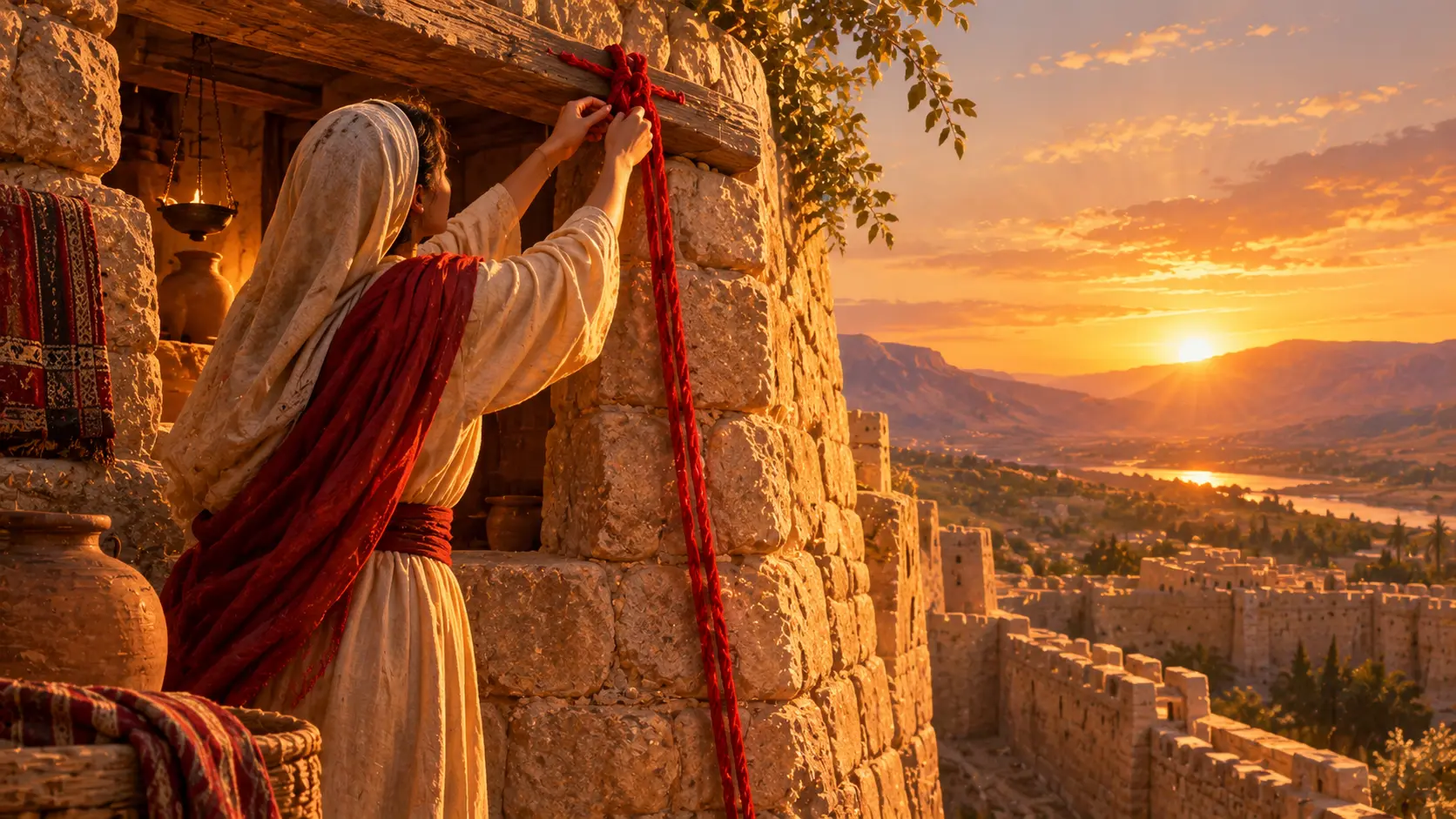
Imagined artwork for Joshua 2:18–21. The cord identifies the household covered by the spies’ promise; its connection to Christ’s blood is devotional typology.
Jericho trusted its walls. Rahab trusted the God whose works she had only heard about. A scarlet cord in a window became the visible sign of a promise—and a woman known for her past became remembered for her faith.
Faith Inside a Doomed City
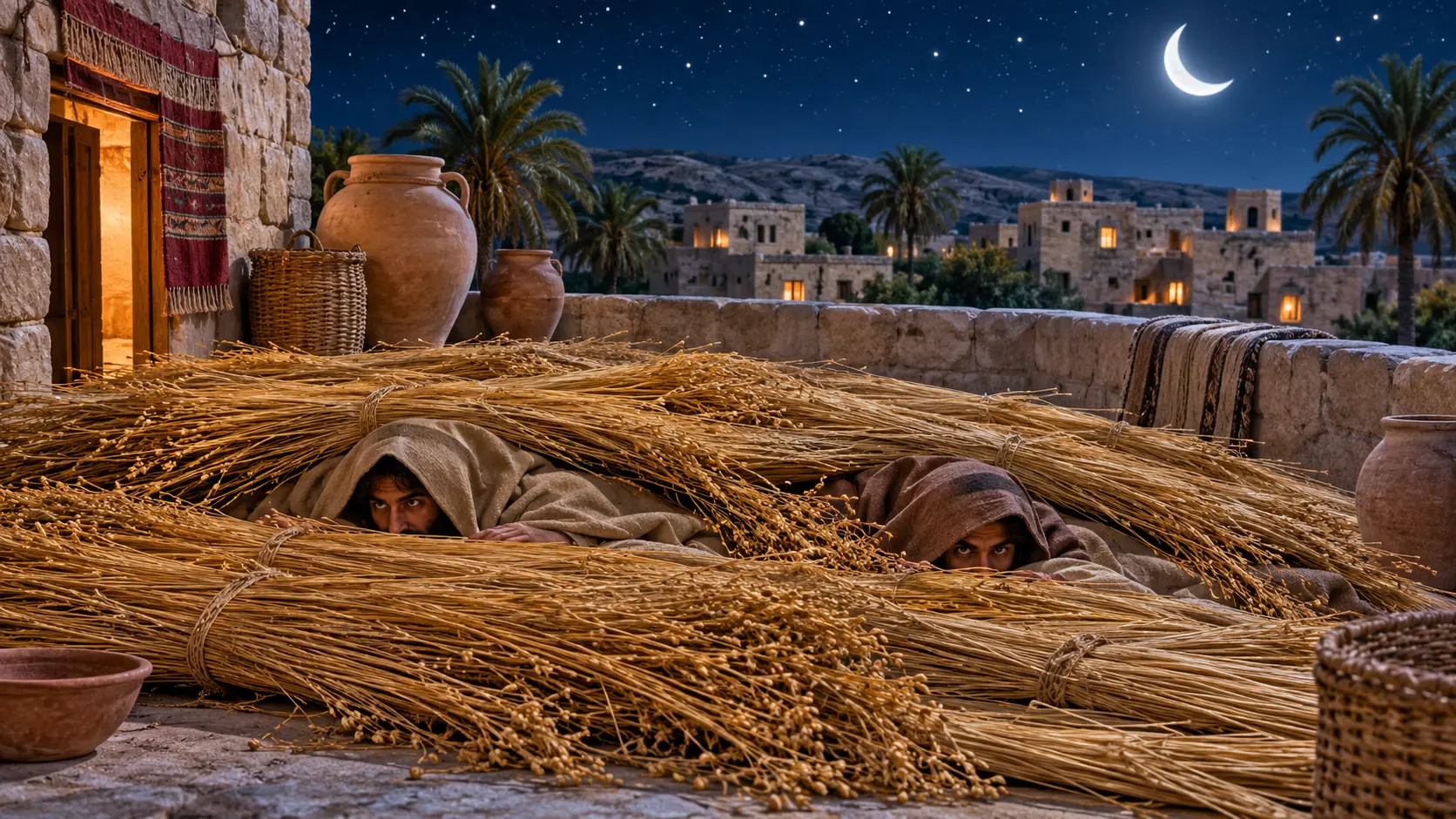
Joshua sends two men to view the land, especially Jericho. They enter Rahab’s house, and the king demands their surrender. Rahab has hidden them beneath stalks of flax on the roof (Joshua 2:1–7). Her choice puts her at risk before Israel has won a battle.
She Heard—and Believed
Rahab explains that Jericho has heard about the Red Sea and Israel’s victories over Sihon and Og. Fear has gripped the city. Yet she goes beyond fear: “the LORD your God, he is God in heaven above, and in earth beneath” (Joshua 2:9–11).
Her confession recognizes God’s sovereignty before the walls fall. She has not seen every sign herself. She receives the testimony of His deeds and acts upon it. Faith here is not confidence in Israel’s military strength; it is allegiance to Israel’s God.
The Promise Included Her Household
Rahab asks the spies to spare her father, mother, brothers, sisters, and all belonging to them (Joshua 2:12–14). They pledge their lives for hers, provided she does not disclose their mission. She lowers them by a cord through her window, for her house stands upon the city wall.
The agreement has concrete conditions. She must bind the scarlet line in that window, gather her family into the house, and keep the matter secret (Joshua 2:17–21). The cord is not a magical object. It identifies the household protected by the promise.
Does the Scarlet Cord Mean Christ’s Blood?
Christians have often seen a devotional resemblance between Rahab’s scarlet cord and the blood marking Israel’s doors at Passover. Both narratives involve a household sheltered during judgment. This can illuminate the larger biblical theme of deliverance, but Joshua does not explicitly say that the cord predicts Christ’s blood. The New Testament directly emphasizes Rahab’s faith and actions, not the colour as a prescribed sacrament.
Faith Made Visible
Hebrews says Rahab did not perish with the unbelieving because she received the spies with peace (Hebrews 11:31). James cites her receiving and sending them out another way (James 2:25–26).
These passages do not praise every detail of her deception as a universal example. They highlight faith that acts. Her welcome, risk, and practical protection show that her confession is more than words.
When the Walls Fell
Joshua orders the spies to bring Rahab and her family out. They are initially placed outside Israel’s camp; the narrative then says she dwells in Israel (Joshua 6:22–25). Matthew 1:5 names Rachab, the KJV spelling of Rahab, in the genealogy leading to Jesus. The outsider’s story becomes part of the history of redemption.
An Open Door for Others
The sermon reads Jericho as a picture of a world awaiting judgment. That is typology, not an explicit identification of Jericho’s king with Satan. Its practical challenge is clearer: do we welcome people seeking truth, or keep them outside because of their background?
Rahab’s faith opened a refuge for others. Our faith should likewise become hospitality, patient teaching, and care—not factional pride. God’s mercy does not require a spotless past before He begins a new future.
A Prayer of Courage
Lord, give us faith that listens, believes, and acts. Help us welcome those seeking You and care for our households without trusting in the walls around us, in Jesus Name Amen