 Cedar Biblical
Decoding · 7 min read
Who May Abide the Day of His Coming? The Refiner's Fire and Fuller's Soap
Malachi 3 asks who can stand when the Lord appears. The answer lies in a fire that purifies rather than destroys.
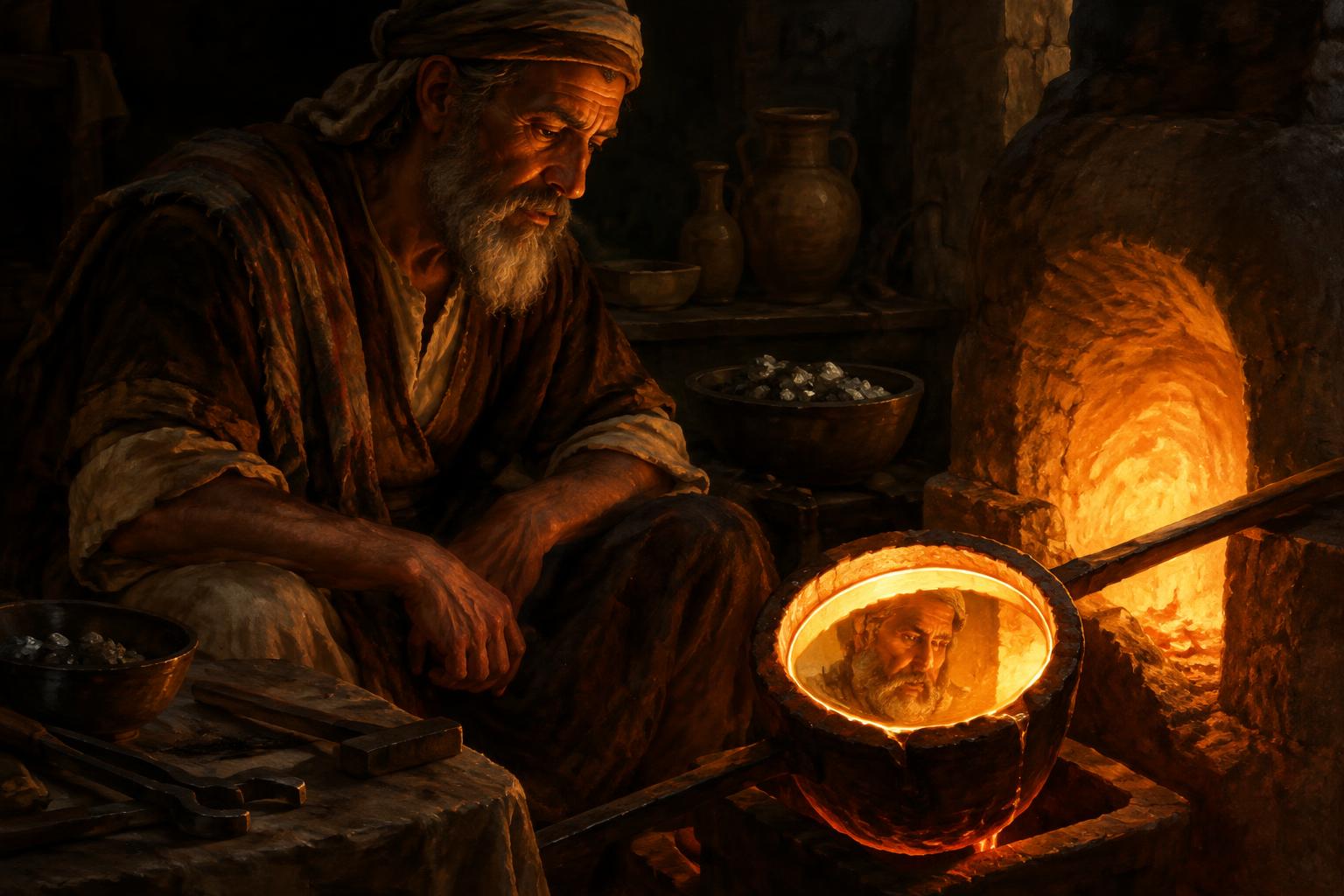
"But who may abide the day of his coming? and who shall stand when he appeareth? for he is like a refiner's fire, and like fullers' soap" (Malachi 3:2).
Malachi asks a question that sounds frightening. The coming of the Lord is longed for, yet the prophet asks who can endure it. The apparent contradiction dissolves when we notice the two images he chooses. A refiner's fire does not destroy silver; it frees it from dross. Fuller's soap does not ruin cloth; it makes it white. The day that threatens the proud is the day that perfects the faithful.
The Messenger and the Lord
Malachi 3:1 promises a messenger who will prepare the way, and then "the Lord, whom ye seek, shall suddenly come to his temple." The Gospels apply the first part to John the Baptist (Matthew 11:10). The refining language that follows speaks of Christ's work at both His first and second comings: at the first, He cleansed the Temple and called hearts to repentance; at the second, He completes the purification of His people.
The Refiner Sits
"He shall sit as a refiner and purifier of silver: and he shall purify the sons of Levi" (Malachi 3:3). Notice that the Refiner sits. He does not leave the crucible unattended. A silversmith watches until the dross has risen and he can see his own reflection in the molten metal. So God watches over every trial His people pass through, measuring the heat, never leaving.
Who are the "sons of Levi"? In Malachi's day, the priests had become careless (Malachi 1:6–8; 2:7–8). The New Testament calls believers "a royal priesthood" (1 Peter 2:9). The refining begins with those who serve nearest to God.
The Day of Fire in Scripture
The prophets describe the Day of the Lord as a "great day," a day of "wrath, trouble and distress" (Zephaniah 1:14–15). Daniel speaks of "a time of trouble, such as never was" and immediately adds, "at that time thy people shall be delivered" (Daniel 12:1). He continues: "Many shall be purified, and made white, and tried" (Daniel 12:10). Once again, the same day brings judgment for some and purification for others.
Revelation pictures this as a time when the nations are shaken and God's righteous judgments are revealed (Revelation 15:4). Yet the overcomers stand on a sea of glass mingled with fire, singing (Revelation 15:2). They have come through the fire, not been consumed by it.
Why Endurance Matters
Jesus warned, "Watch ye therefore, and pray always, that ye may be accounted worthy to escape all these things... and to stand before the Son of man" (Luke 21:36). The word "stand" echoes Malachi's question. Standing is not about strength of body but steadiness of heart.
Many begin well. They are baptised, join a fellowship, sing with joy. But when a real trial arrives, patience fails. Jesus described seed on stony ground: it "endureth for a while: for when tribulation or persecution ariseth because of the word, by and by he is offended" (Matthew 13:21). The refiner's fire reveals what kind of soil we are.
Fuller's Soap: The Daily Cleansing
The fuller beat, washed, and bleached cloth until it was white. Fire is dramatic; soap is daily. God uses both. Some purification comes in sudden crises; most comes through ordinary obedience, confession, and the "washing of water by the word" (Ephesians 5:26). At the Transfiguration Jesus' garments became "exceeding white as snow; so as no fuller on earth can white them" (Mark 9:3), a glimpse of the purity He intends to share.
An Offering in Righteousness
The goal of refining is stated plainly: "that they may offer unto the LORD an offering in righteousness. Then shall the offering of Judah and Jerusalem be pleasant unto the LORD" (Malachi 3:3–4). God does not purify us merely to punish impurity but to make our worship acceptable again.
Who May Abide?
The answer is not "the strong," but "the refined." Those who let the Refiner do His work now will not fear His appearing. "Every man that hath this hope in him purifieth himself, even as he is pure" (1 John 3:3). The fire is real, but so is the hand that holds the crucible, and the eyes that wait to see His own image shining in us.