 Cedar Biblical
Decoding · 20 min read
The Seed of the Woman: The Promise That Crushes the Serpent's Head
One promise in Eden, one bloodline under siege: the Flood, the giants, the curse on Canaan, stars and sand, the scepter of Judah, and the hidden child who kept the line alive.
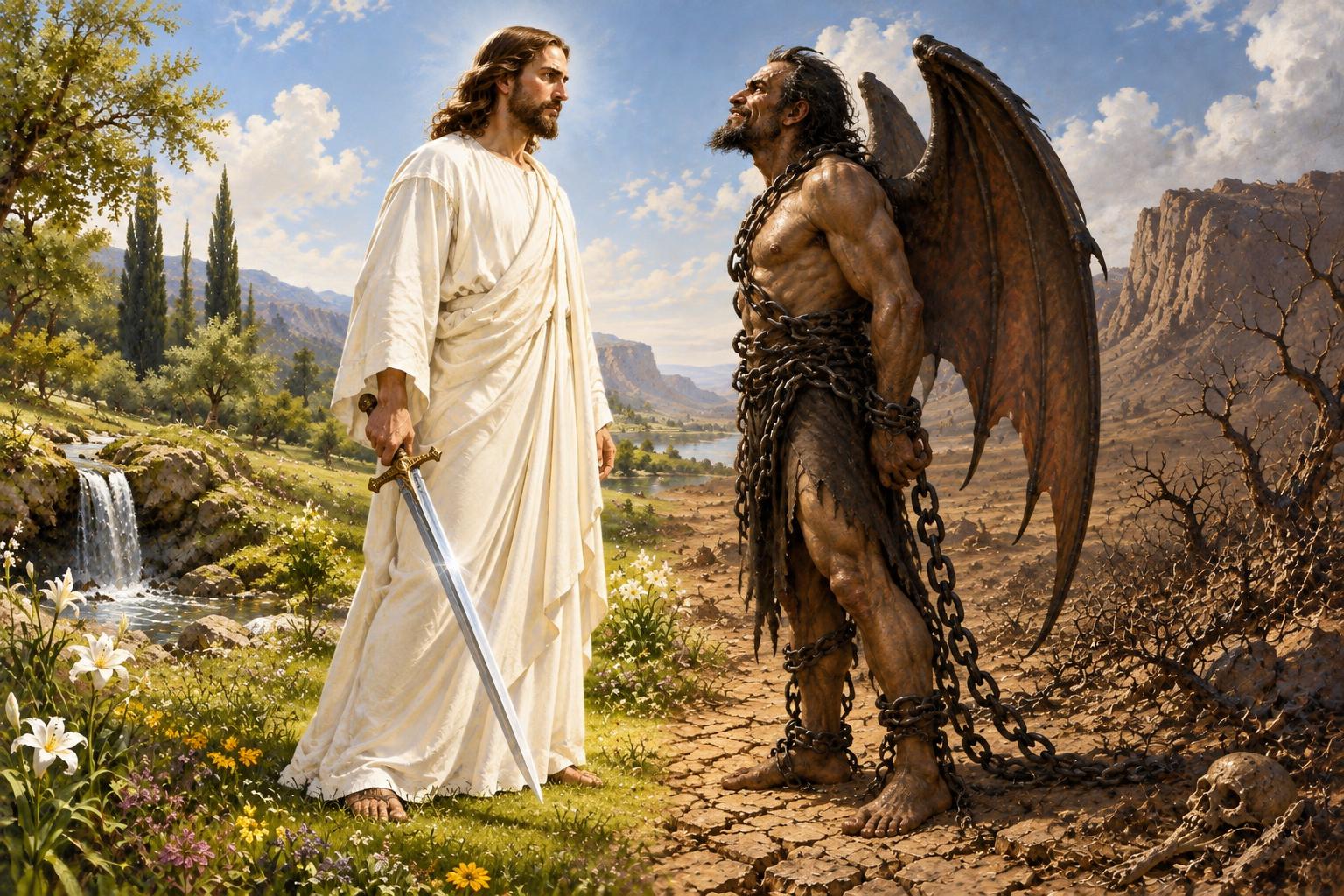
One verse in the third chapter of Genesis sets the course for the whole Bible. Spoken in Eden, right after the fall, it promised a coming Seed who would crush the serpent's head. From that day, Scripture reads like the story of a single bloodline under siege: corrupted, scattered, hunted and nearly wiped out, yet always kept alive by a thread. This study follows that thread from the garden to the cross. Where the text seems to raise a problem, such as a curse that falls on the wrong son, we stop and look closely at what it actually says.
Part I: The Promise in the Garden
The First Gospel
"I will put enmity between you and the woman, and between your seed and her Seed; He shall bruise your head, and you shall bruise His heel" (Genesis 3:15). Church writers since Irenaeus have called this verse the Protoevangelium, the first announcement of the gospel. It is spoken to the serpent, not to Adam, and it is a sentence of judgment wrapped around a promise of rescue.
Notice three details. First, there are two seeds, two lines of descent that will stand in conflict through history. Second, the Seed is credited to the woman, an unusual way to speak in a Bible that normally traces lineage through fathers. Paul later writes that "when the fullness of the time had come, God sent forth His Son, born of a woman" (Galatians 4:4). Third, the wounds are unequal: a bruised heel heals, a crushed head does not.
Who Was the Serpent?
The Hebrew word for serpent is nachash (Strong's H5175). It is closely tied to a verb spelled the same way, nachash (H5172), which means to whisper a spell, practise divination or observe omens. The tempter in Eden works by whispered suggestion: "Has God indeed said...?" (Genesis 3:1). Revelation removes the disguise and names him "that serpent of old, called the Devil and Satan" (Revelation 12:9).
Why the War Began
"Through one man sin entered the world, and death through sin, and thus death spread to all men" (Romans 5:12). Humanity was made in God's image to reign over creation (Genesis 1:26) and to bring Him glory (Isaiah 43:7). After the fall, the only way back runs through the promised Seed. That is why the enemy's strategy, from this point forward, is aimed at that line of descent. If the Seed could be corrupted, cut off or never born, the promise would fail.
Part II: The World That Was and the Flood
Corrupting the Seed
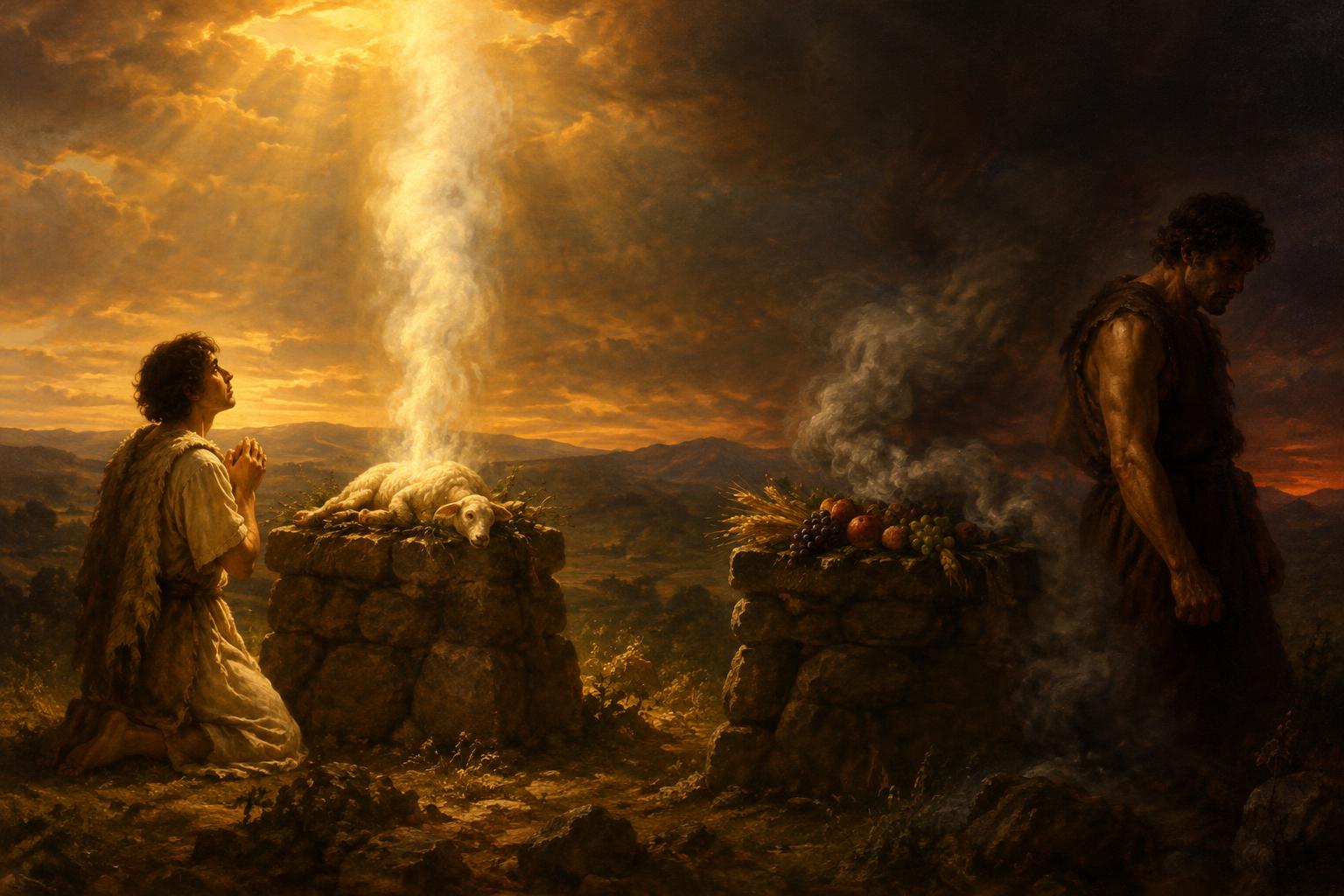
The first attack came early. Cain killed Abel, the brother whose offering God accepted (Genesis 4:8; Hebrews 11:4). God answered by giving Seth, whose very name means "appointed" (Genesis 4:25). Then Genesis 6 records something stranger: "the sons of God saw the daughters of men, that they were beautiful," and the Nephilim appeared on the earth (Genesis 6:1–4).
Readers have understood "the sons of God" in two main ways. Many early Jewish and Christian writers, reading Job 1:6 and Jude 6, took them as fallen angels. Others, from Augustine onward, have read them as the godly line of Seth intermarrying with the line of Cain. Whichever view one holds, the text makes the result clear: "the earth was corrupt before God, and the earth was filled with violence" (Genesis 6:11).
Noah, Perfect in His Generations
Against that background, Genesis 6:9 says Noah "was a just man, perfect in his generations." The Hebrew word tamim means whole or without blemish, the same word used for sacrificial animals. Some teachers read "in his generations" as a remark about Noah's untainted descent; most commentators read it as his moral integrity among his contemporaries. Either way, God preserved through Noah the line that would lead to the promised Seed.
The Message in Methuselah
The chronology of Genesis 5 contains a quiet sermon. Enoch walked with God after the birth of a son named Methuselah. A widely taught reading of the name joins muth (death) and shalach (to send), giving "when he dies, it shall be sent." Scholars debate this etymology; others prefer "man of the spear." But the arithmetic is striking: adding the ages given in Genesis 5, Methuselah dies in the very year of the Flood. The longest life in Scripture stands as a picture of God's patience before judgment (2 Peter 3:9).
The Ark of Gopher Wood
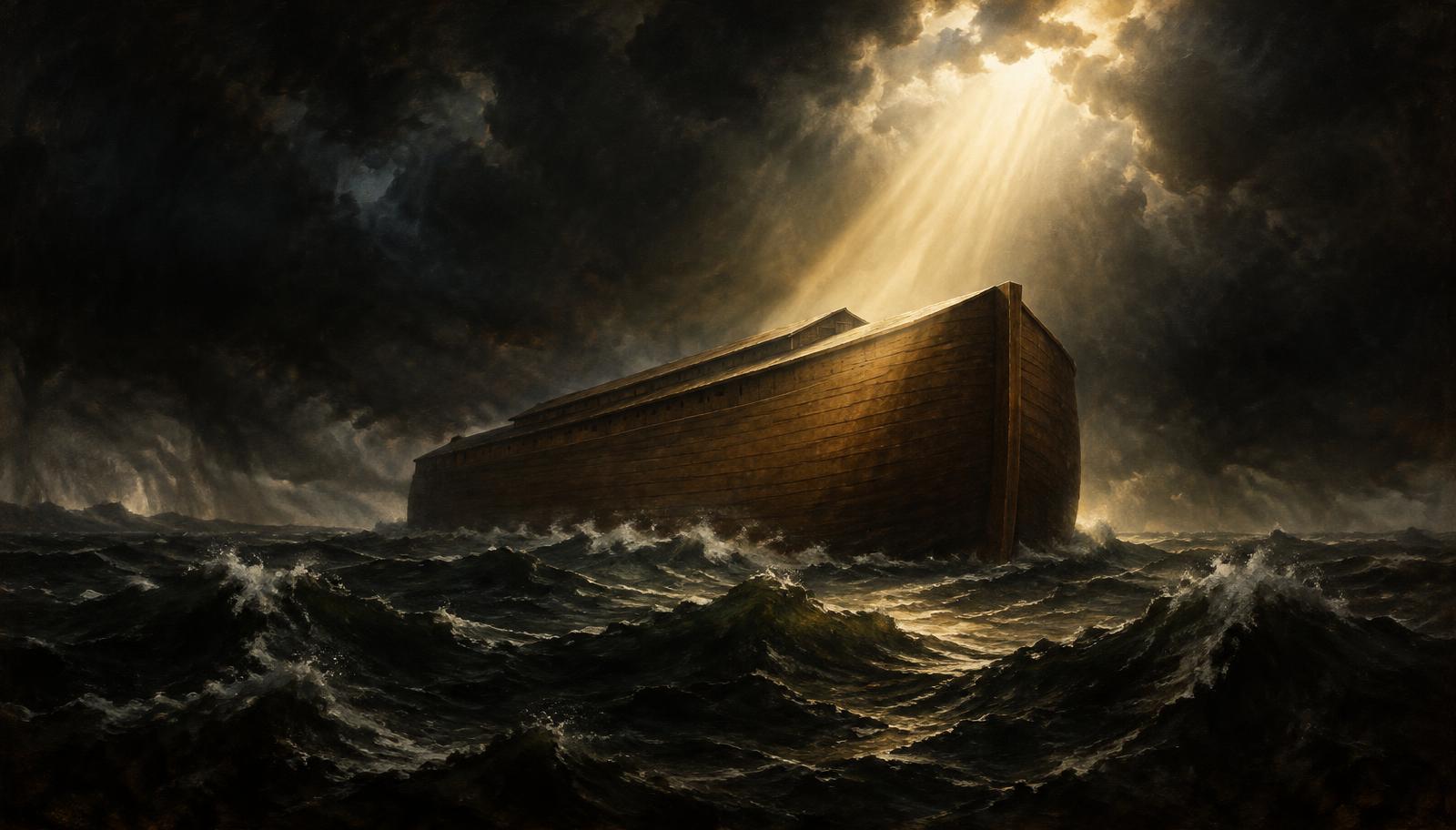
God told Noah to build an ark of gopher wood, a word used only once in the Bible and often identified with cypress or another resinous timber. It was 300 cubits long, 50 wide and 30 high, with three decks, one door and a window, and sealed "inside and outside with pitch" (Genesis 6:14–16). The Hebrew word for pitch, kopher, shares its root with kaphar, the word for atonement. The vessel that carried the Seed through judgment was covered, inside and out.
Giants After the Flood
The Nephilim reappear later: the spies who scouted Canaan reported, "we saw the giants... and we were like grasshoppers in our own sight" (Numbers 13:33). The line of giants ran on through Og of Bashan, the Anakim, and the Philistine warriors of Gath, Goliath, his brother Lahmi and a giant with six fingers and six toes (2 Samuel 21:18–22; 1 Chronicles 20:4–8). Each time they stood in the path of the people who carried the promise, and each time they fell.
Part III: The Curse on Canaan
A Puzzle in Genesis 9
After the Flood, Noah lay drunk and uncovered in his tent. "Ham, the father of Canaan, saw the nakedness of his father, and told his two brothers outside" (Genesis 9:22). Shem and Japheth covered him. When Noah awoke, he said, "Cursed be Canaan" (Genesis 9:25). The obvious question is why Canaan, Ham's son, bears the curse rather than Ham himself.
Reading It Carefully
Several clues help. The text calls Ham "the father of Canaan" twice before the curse is ever spoken (Genesis 9:18, 22), as if preparing us. Verse 24 says Noah knew what "his youngest son" had done to him. Some interpreters note that Ham is not otherwise called the youngest, and suggest the phrase refers to Canaan, Noah's grandson. Others observe that Ham had already been blessed by God along with his brothers (Genesis 9:1), and a blessing God has spoken is not reversed by a man. And the curse is prophetic rather than personal: it looks ahead to the Canaanite nations whose practices God would later judge (Leviticus 18:24–28). None of these readings justifies the later misuse of this passage to defend racial slavery; the curse names one people group, not a skin colour.
The Line of Shem
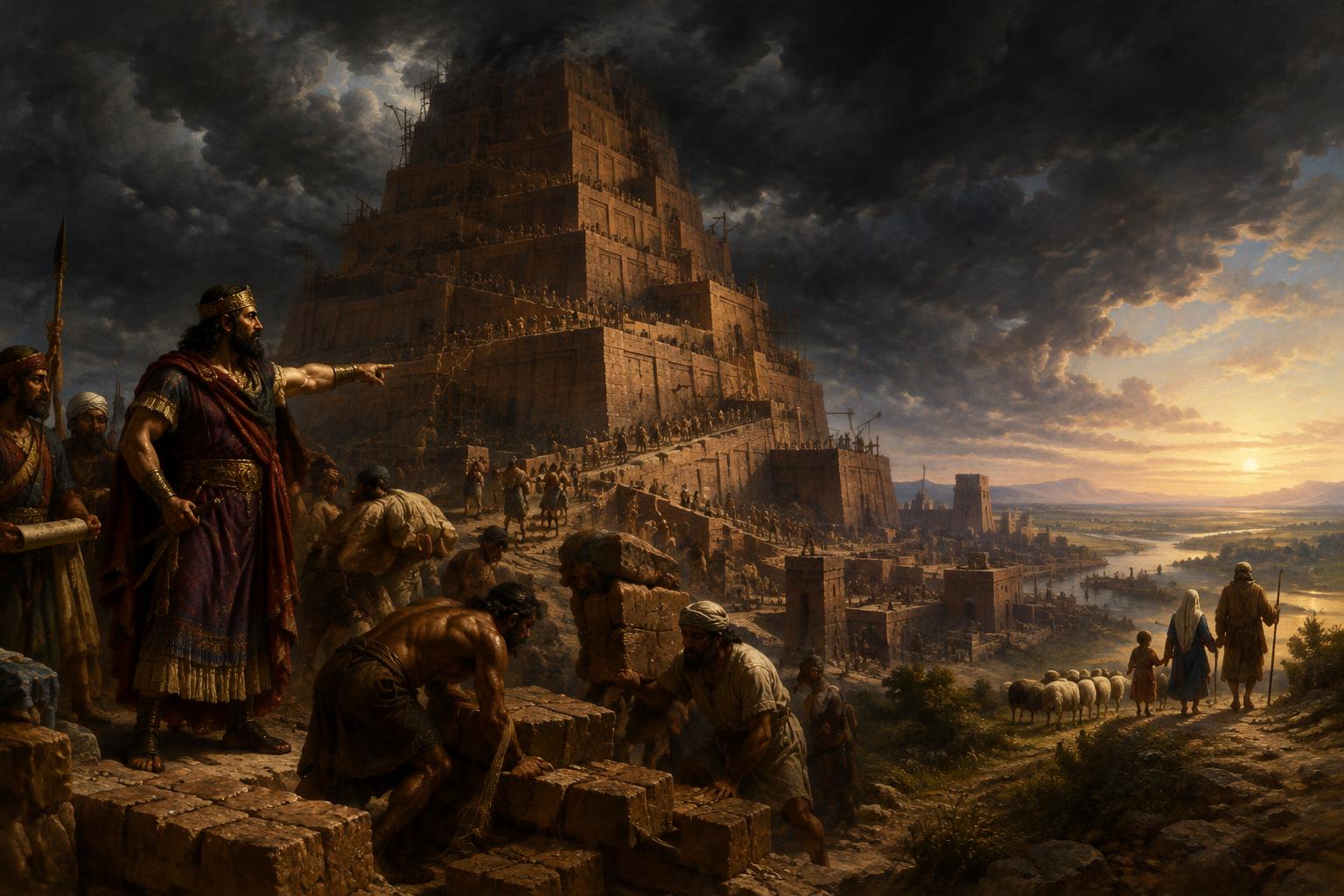
Meanwhile the promise moved on through Shem. Genesis 11 traces the line: Shem, Arphaxad, Shelah, Eber, Peleg, Reu, Serug, Nahor, Terah and Abram. The name Peleg comes from palag, "to divide," because "in his days the earth was divided" (Genesis 10:25). Human lifespans fall sharply along this list, from Shem's 600 years to Nahor's 148, but the line of the Seed is never broken.
Part IV: Stars and Sand

Two Kinds of Children
God took Abram outside and said, "Look now toward heaven, and count the stars if you are able... So shall your descendants be" (Genesis 15:5). Later He added, "as the sand which is on the seashore" (Genesis 22:17). Many teachers see in the two images two kinds of children: an earthly, natural family and a heavenly family of faith. Paul makes the second explicit: "those who are of faith are sons of Abraham" (Galatians 3:7).
The Seed Is One
Paul also makes a careful point about grammar: "He does not say, 'And to seeds,' as of many, but as of one, 'And to your Seed,' who is Christ" (Galatians 3:16). The Hebrew word zera can be collective or singular. In Genesis it often means descendants in general, but Paul reads the promise as finally narrowing to one Person. Both are true: the line is many, and its goal is One.
Jacob's Ladder and the Open Door
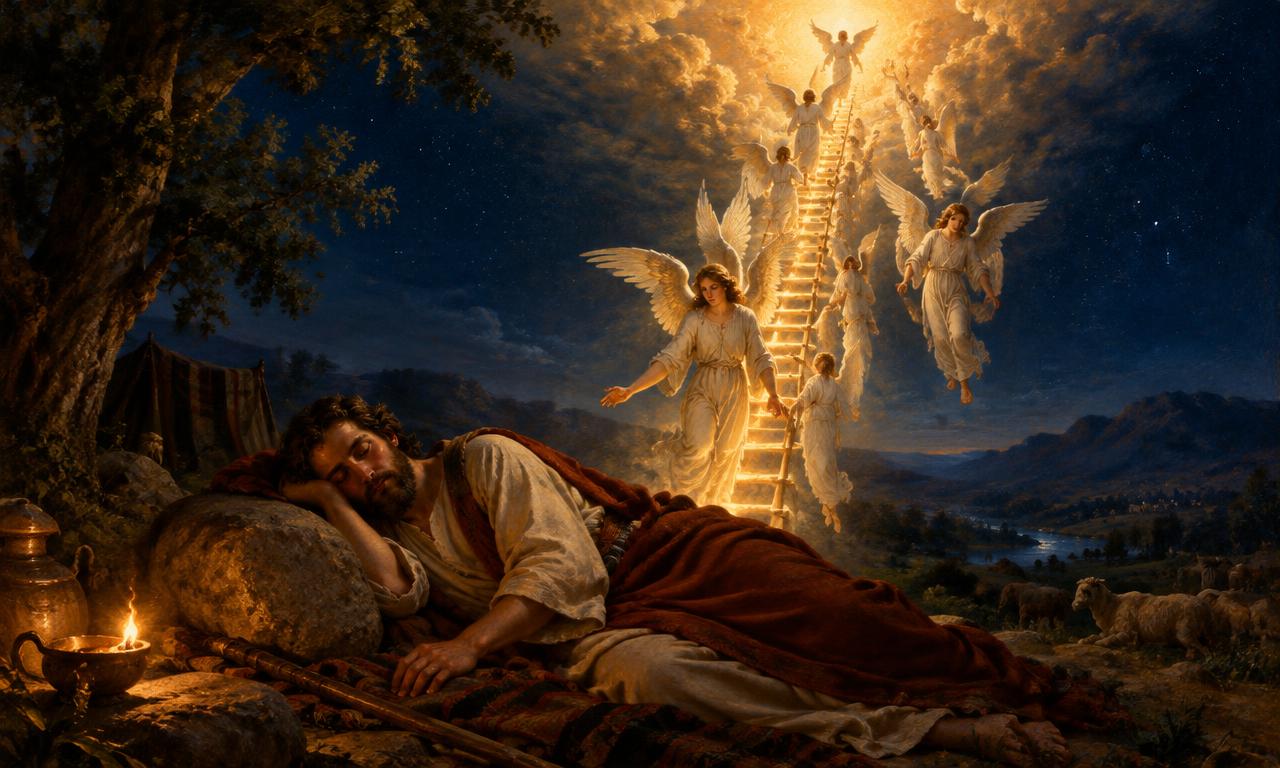
At Bethel, Jacob saw a ladder set on the earth with its top reaching heaven and angels going up and down on it (Genesis 28:12). Jesus applied the vision to Himself: "you shall see heaven open, and the angels of God ascending and descending upon the Son of Man" (John 1:51). He is the door (John 10:9), and Hebrews says we enter the holiest "by a new and living way which He consecrated for us, through the veil, that is, His flesh" (Hebrews 10:19–20). The ladder Jacob saw in a dream became a Person.
The Faithful Line
Hebrews 11 reads like a roll call of the Seed's carriers: Abel, Enoch, Noah, Abraham, Sarah and the nation born from them. "These all died in faith, not having received the promises, but having seen them afar off" (Hebrews 11:13). Some "received their dead raised to life again," while others "were tortured, not accepting deliverance, that they might obtain a better resurrection" (Hebrews 11:35).
Part V: Which Heaven? Enoch and Elijah
Three Heavens
The Hebrew word shamayim is always plural and covers more than one realm: the sky where birds fly, the expanse of sun and stars, and the dwelling place of God. Moses spoke of "heaven and the highest heavens" (Deuteronomy 10:14), and Paul was caught up to "the third heaven" (2 Corinthians 12:2). In Genesis 1:8, God "called the firmament Heaven."
An Apparent Contradiction
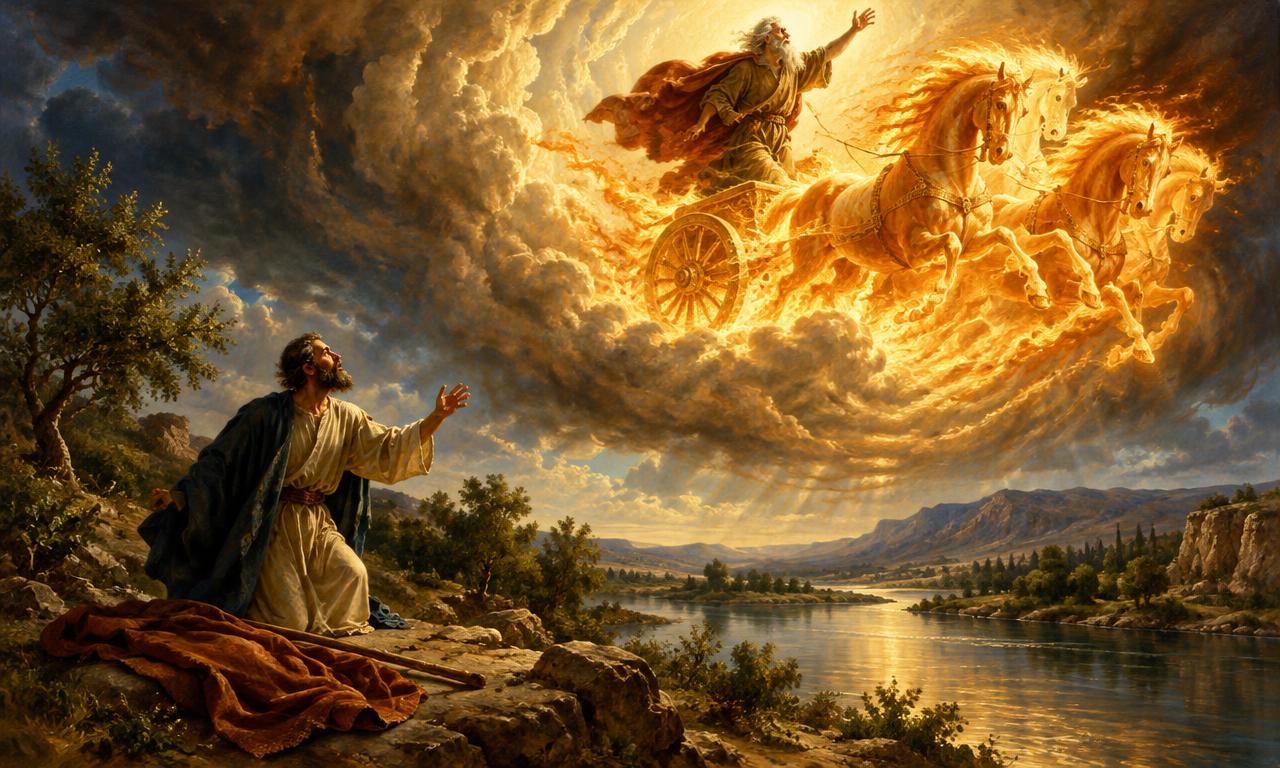
Jesus said, "No one has ascended to heaven but He who came down from heaven" (John 3:13). Yet "Enoch walked with God; and he was not, for God took him" (Genesis 5:24), and Elijah "went up by a whirlwind into heaven" (2 Kings 2:11). How do these fit together?
The distinction between the heavens helps. When Elijah was taken, the prophets at Jericho expected that "the Spirit of the LORD has taken him up and cast him upon some mountain or into some valley" (2 Kings 2:16), and Obadiah had earlier feared exactly that kind of carrying away (1 Kings 18:12). Philip was similarly "caught away" and found at Azotus (Acts 8:39–40). Some note that years after Elijah's departure, Jehoram of Judah received "a letter from Elijah the prophet" (2 Chronicles 21:12), though it may have been written in advance. Hebrews says Enoch "was taken away so that he did not see death," and then that "these all died in faith" (Hebrews 11:5, 13). Interpreters differ on the details, but the core teaching holds: Christ alone ascended into the presence of the Father by His own authority, and He alone opens that way for others.
Part VI: The Scepter of Judah
From Egypt to the Judges
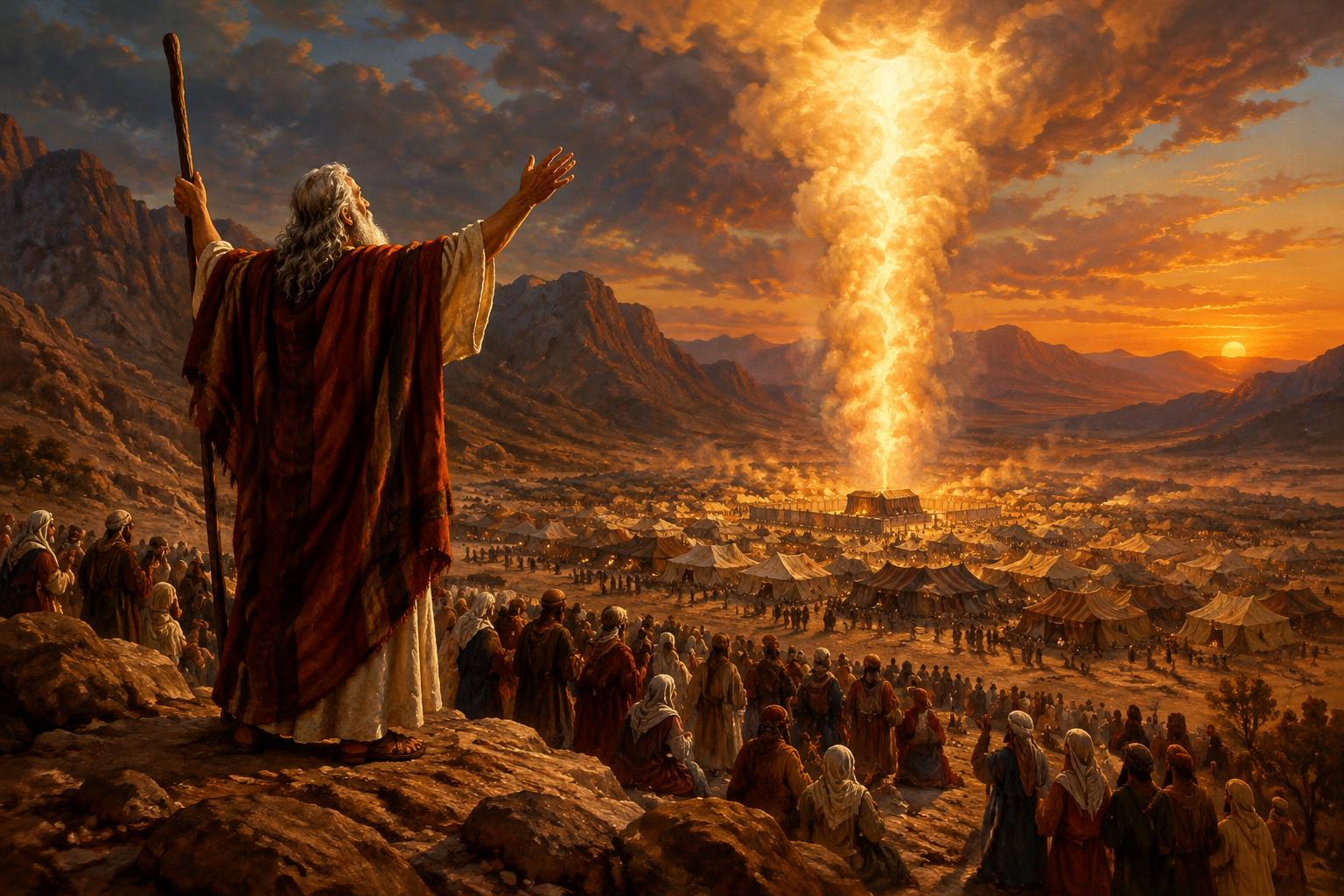
In Egypt the family of Jacob grew into a nation. At Sinai they promised, "All that the LORD has said we will do" (Exodus 24:3), and within forty days they bowed to a golden calf (Exodus 32:8). God proposed to consume them and make a nation from Moses; Moses interceded (Exodus 32:10–14). At Kadesh, frightened by the giants, they wanted to choose a captain and return to Egypt (Numbers 14:4). The Book of Judges then traces a repeating cycle: the people fall into idolatry, God allows oppression, they cry out, a judge delivers them, peace returns, the judge dies, and the cycle starts again (Judges 2:10–19).
Until Shiloh Comes
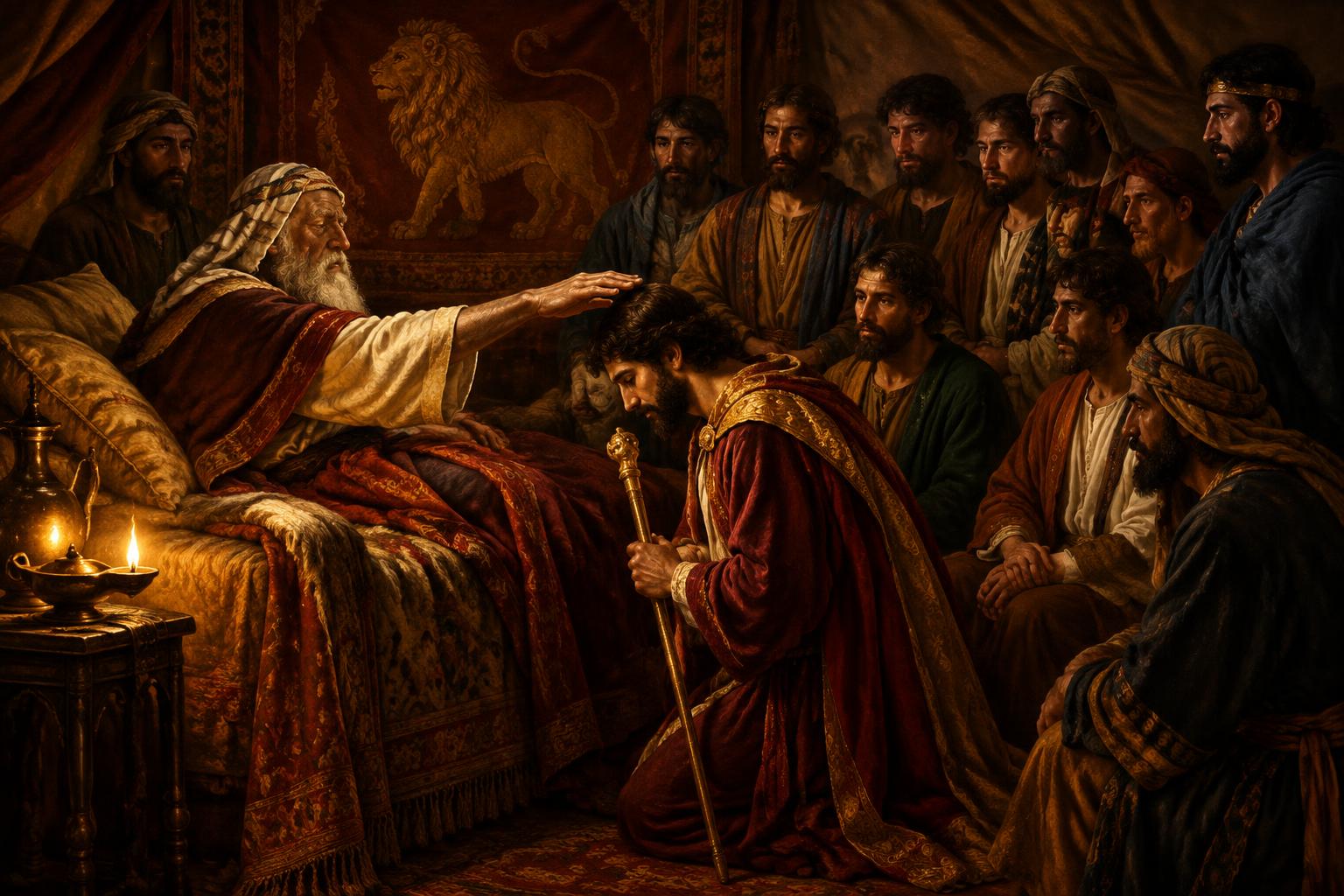
Through all this, the promise had been narrowed to one tribe. Jacob blessed Judah: "The scepter shall not depart from Judah, nor a lawgiver from between his feet, until Shiloh comes; and to Him shall be the obedience of the people" (Genesis 49:10). Jewish and Christian interpreters alike have long read Shiloh as a title of the Messiah.
Ten Generations to David
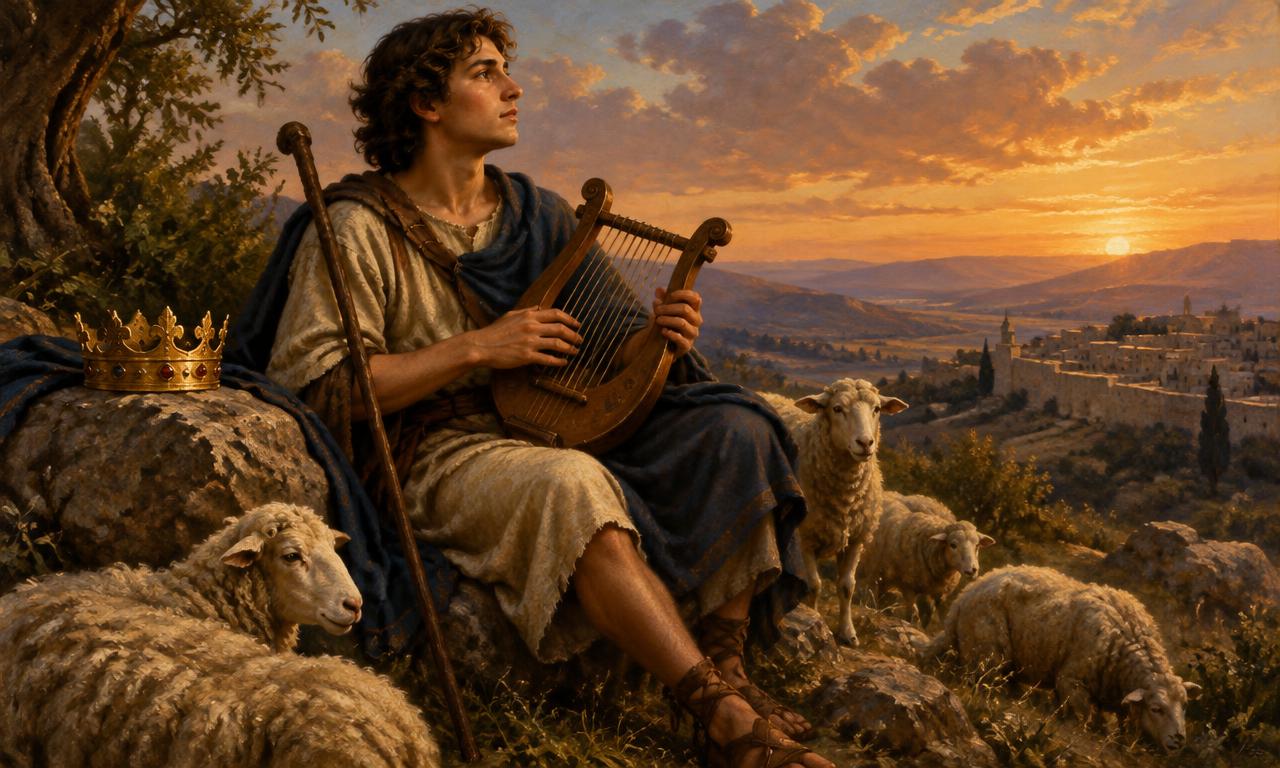
Judah's line came through an unexpected door: Perez, born to Judah and Tamar (Genesis 38). The Law said one born of a forbidden union "shall not enter the assembly of the LORD; even to the tenth generation" (Deuteronomy 23:2). Count from Perez in Ruth 4:18–22: Perez, Hezron, Ram, Amminadab, Nahshon, Salmon, Boaz, Obed, Jesse and David. David is the tenth. Many teachers see here a quiet sign that God's timing for the throne fit His own Law exactly. Matthew lists Tamar by name in the genealogy of Jesus (Matthew 1:3), alongside Rahab, Ruth and Bathsheba: grace written into the bloodline.
Part VII: The Line Under Siege
Dan, a Serpent by the Way
Jacob said, "Dan shall be a serpent by the way, a viper by the path, that bites the horse's heels" (Genesis 49:17). The words echo Genesis 3:15. Dan's later history matches the warning: the tribe set up a carved image and its own priesthood (Judges 18:30–31), and Jeroboam later placed a golden calf at Dan (1 Kings 12:29; Amos 8:14). Dan is missing from the list of tribes in Revelation 7, a fact many readers have noticed.
David's Census
Even David was drawn into the conflict. 2 Samuel 24:1 says the LORD's anger moved David to number Israel; 1 Chronicles 21:1 says "Satan stood up against Israel, and moved David to number Israel." This is a classic apparent contradiction. Read together, they describe one event from two angles, as in Job 1–2: Satan is the active tempter, and God permits the test within His sovereign purpose. The sin lay in counting without the ransom the Law required (Exodus 30:12), trusting numbers rather than God. The plague stopped at the threshing floor of Ornan, the site where the Temple would later stand (1 Chronicles 21:18; 2 Chronicles 3:1).
Athaliah's Massacre
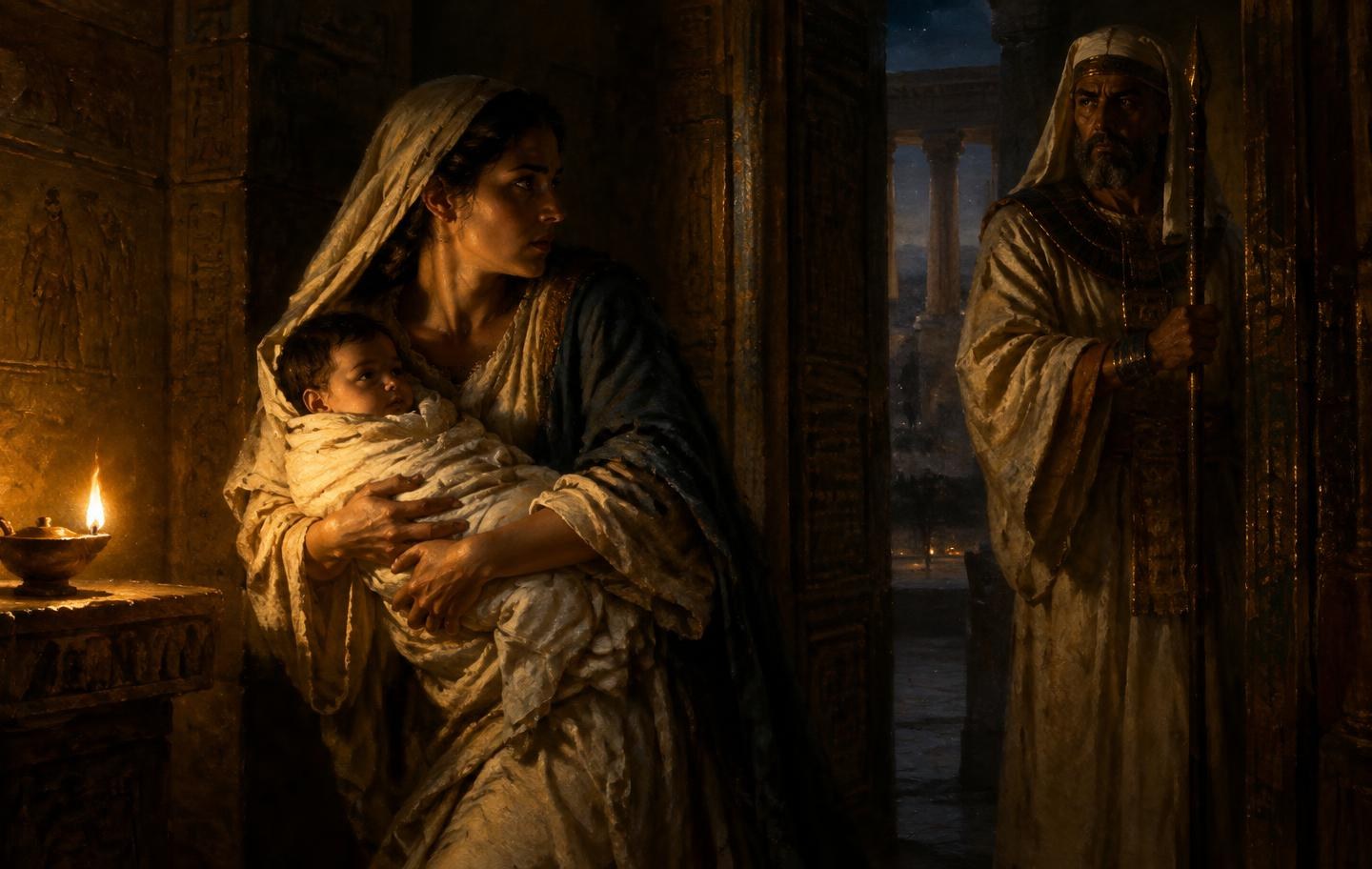
The closest call came in the days of the kings. Jehoram of Judah married Athaliah, daughter of Ahab and Jezebel, joining the royal line to the house that had led Israel into Baal worship. Jehoram killed all his brothers (2 Chronicles 21:4). Arabian raiders then carried off his sons except the youngest, Ahaziah (2 Chronicles 21:17). When Ahaziah was killed, Athaliah "arose and destroyed all the royal heirs" (2 Kings 11:1).
For a moment, the line of David, the line of the promised Seed, hung on a single infant. Jehosheba, the king's sister and wife of the priest Jehoiada, stole away the baby Joash and hid him with his nurse in the house of the LORD for six years (2 Kings 11:2–3; 2 Chronicles 22:11). In the seventh year Jehoiada brought him out, crowned him and gave him the Testimony. The serpent's attack had failed again.
The Seed Kept to the End
After the exile, Ezra grieved that "the holy seed" had mixed with the peoples of the land (Ezra 9:2), and the returning community renewed its covenant. Malachi, the last of the prophets, asked why God made husband and wife one: "He seeks godly offspring" (Malachi 2:15). Then came four hundred years of silence, until an angel spoke to a young woman in Nazareth.
Conclusion: The Heel and the Head
Every attack in this long story aimed at the same target. Cain's violence, the corruption before the Flood, the giants in Canaan, idolatry in Dan and Athaliah's sword all tried to stop the Seed from arriving. Each time, God preserved the line, often through one person: Seth, Noah, Abraham, Judah, David, a hidden child named Joash.
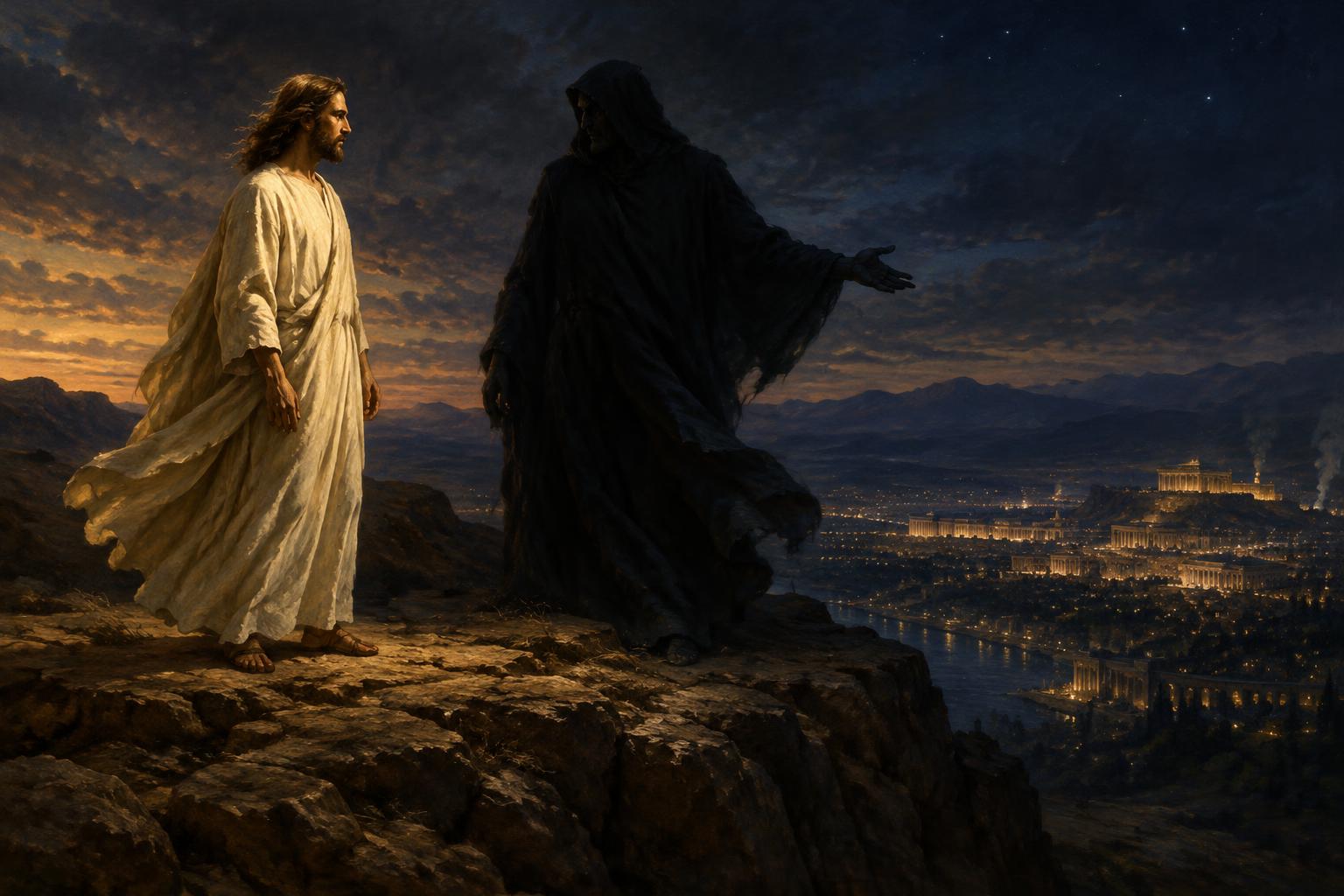
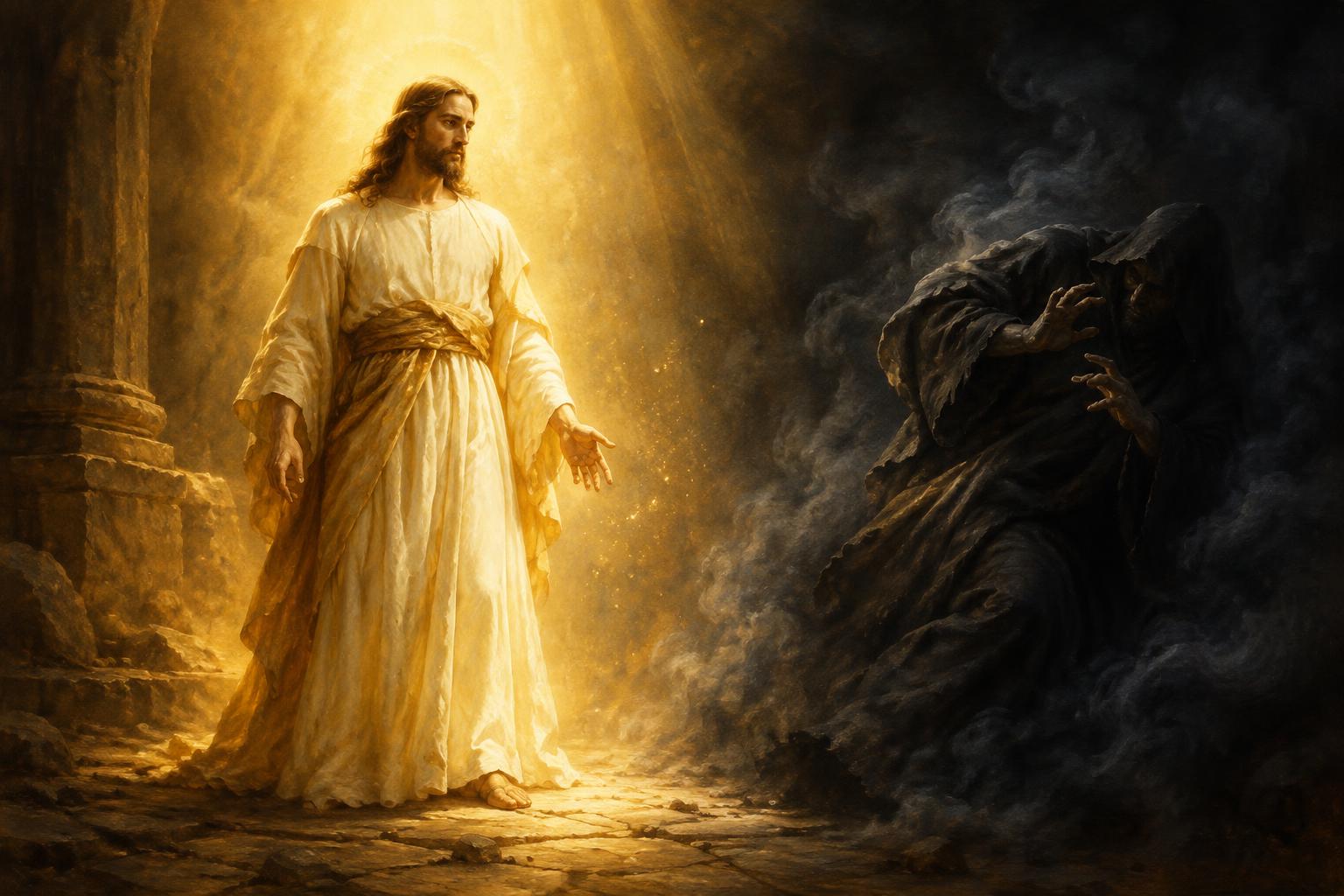
At last the Seed of the woman was born in Bethlehem. Herod, too, tried to kill Him as a child (Matthew 2:16). In the wilderness the ancient serpent met the Seed face to face, and the Seed answered, "Away with you, Satan! For it is written" (Matthew 4:10).
At the cross, the serpent struck His heel. But three days later the tomb was empty, and the head of the ancient enemy was crushed. "For this purpose the Son of God was manifested, that He might destroy the works of the devil" (1 John 3:8).
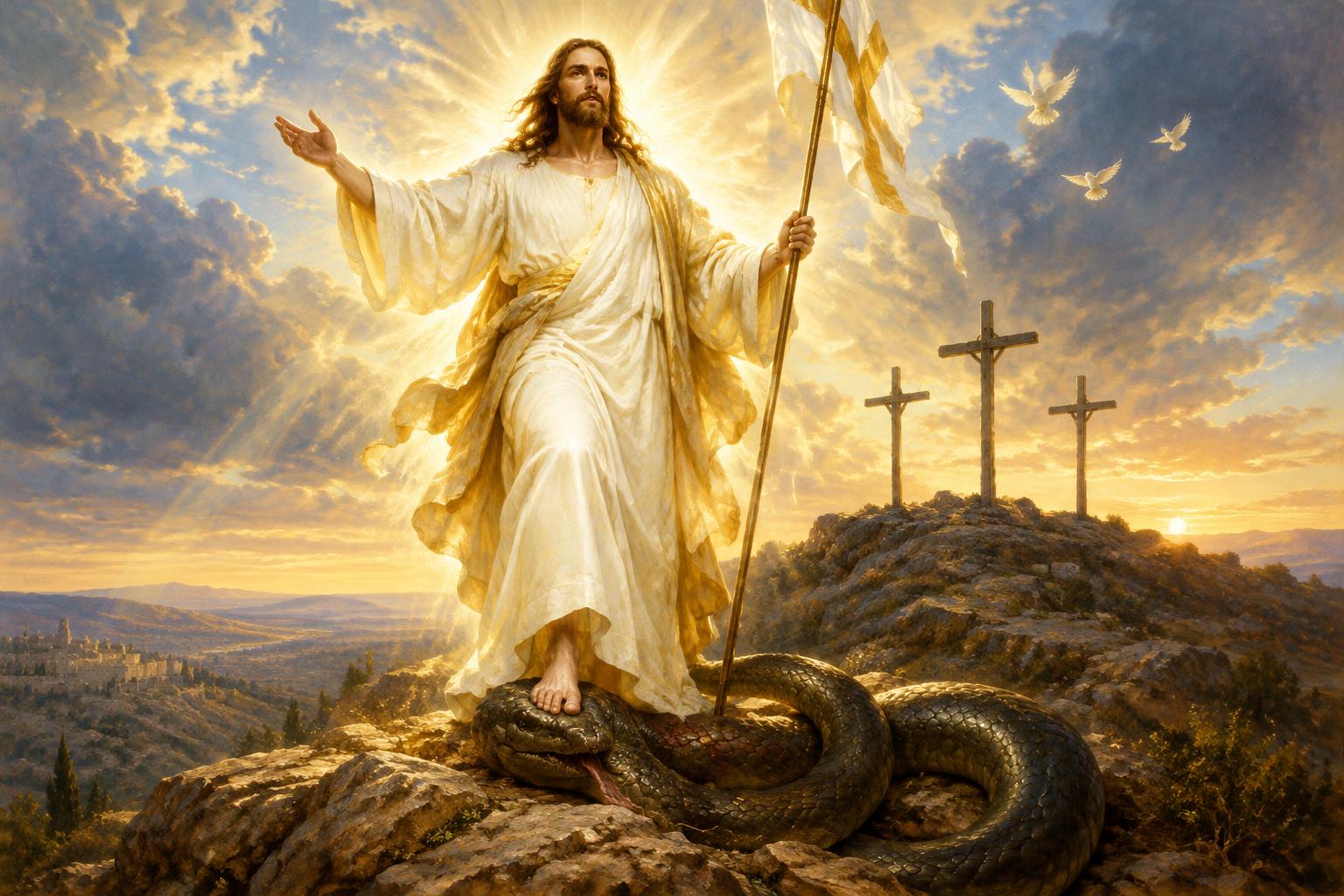
Paul draws the final line for every believer: "the God of peace will crush Satan under your feet shortly" (Romans 16:20). The war that began in a garden ends in victory, and those who belong to the Seed share in it.
This study draws on the "Who Is That Seed?" Bible study series. Some details, such as the meaning of Methuselah's name and the identity of the sons of God, are debated among scholars and are presented here as interpretations rather than settled fact.