 Cedar Biblical
Decoding · 5 min read
What Did Jesus Mean by “Take Up Your Cross”?
Unpacking Jesus’ radical call to self-denial, the Roman reality of crucifixion, and what it truly means to bear the cross daily in Christ.
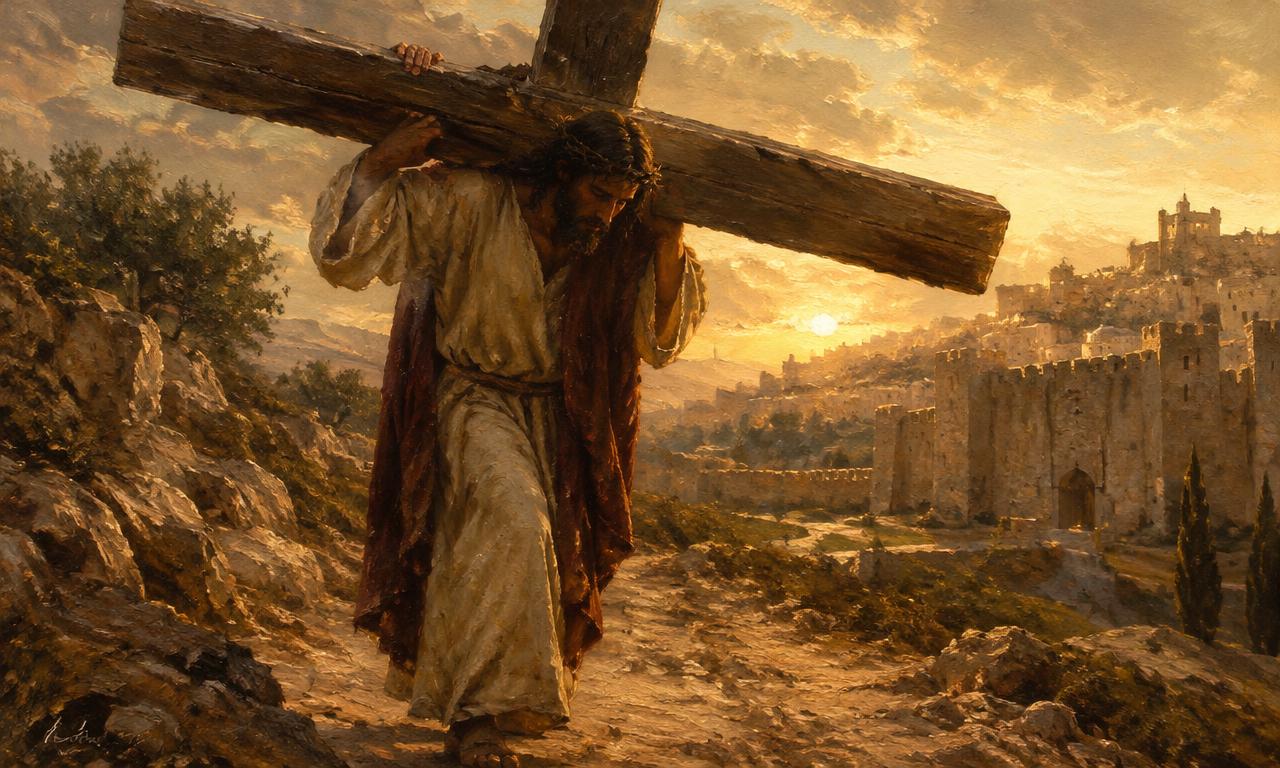
In contemporary speech, the cross has been softened. It dangles from gold chains, ornaments church steeples, and serves as a shorthand metaphor for surviving life’s unavoidable nuisances. People speak of a lingering illness, an irritable boss, or a strained marriage as their cross to bear. Yet when Jesus turned to His disciples in Caesarea Philippi and uttered the words recorded in Matthew 16:24, the imagery was neither decorative nor casually philosophical. It was horrific, visceral, and unmistakable.
To understand Jesus' command, we must strip away centuries of religious domesticity and step directly into the first-century Roman world. When Jesus said, If anyone desires to come after Me, let him deny himself, and take up his cross, and follow Me, His listeners did not think of endurance through minor life frustrations. They thought of raw wood, public shame, and the irreversible journey toward death.
Carrying the Crossbar: The Roman Reality
In the Roman Empire, crucifixion was designed as a tool of terror and psychological deterrence. It was reserved for slaves, rebels, and criminals deemed subhuman. The condemned criminal did not usually carry the entire vertical stake, which was often already fixed permanently in the ground at the execution site outside the city gate. Instead, the prisoner was forced to carry the patibulum, the heavy horizontal crossbeam.
Placing the crossbar across the beaten, bloodied shoulders of a condemned man served a specific civic purpose. It was a visual confession that the individual’s rebellion against Rome had failed. It proclaimed absolute submission to the empire’s authority. By carrying the instrument of his own execution through mocking crowds, the criminal was stripped of all rights, all honor, and all claims to his own future. When a man shouldered the crossbar, everyone in the city knew he was taking a one-way walk. He was not coming back.
The Simon of Cyrene Moment
This grim reality became historical and personal on the road to Golgotha. As Jesus stumbled under the weight of His own crossbar, having endured the brutal scourging of the Roman cohort, the soldiers exercised their legal right of impressment. They grabbed a passerby named Simon of Cyrene and laid the wood upon his back, compelling him to walk behind Jesus.
Simon’s experience captures the external picture of what Jesus demanded spiritually. Simon did not choose the wood; it was placed on him, redirecting his steps toward death. Yet in the spiritual economy of the kingdom, Jesus invites His followers to do voluntarily what Simon was forced to do by brute force: to yield autonomy, accept the public reproach of belonging to the Master, and follow Him willingly toward the mortification of self.
Misunderstanding the Cross: Ordinary Hardship vs. Sacred Surrender
This historical context exposes why modern believers so often confuse ordinary human hardship with the cross of Christ. Sickness, financial stress, natural disasters, and relational friction are common to all humanity, believer and unbeliever alike. A cross, however, is never something inflicted upon us by mere circumstance. A cross is an instrument of voluntary obedience.
Jesus did not say that carrying our common human burdens would save us. The cross represents the conscious, sacrificial decision to obey God at the direct expense of our personal comfort, prestige, and self-rule. When you refuse to retaliate against slander because of Christ, you are bearing a cross. When you abandon your private ambitions to align with God's will, you are carrying the wood. Suffering becomes a cross only when it is accepted for Christ’s sake and born in fellowship with His obedience.
The Daily Dying: Resolving Luke and Matthew
A careful reader of the Gospels will notice an intriguing textual distinction. In Matthew 16:24, Jesus issues the command simply: take up his cross and follow Me. But in Luke 9:23, Luke adds a striking adverb: let him take up his cross daily. At first glance, this might appear contradictory. How can an instrument that kills a person once be carried every single day?
The resolution lies in the difference between judicial status and practical sanctification. Matthew emphasizes the decisive, once-for-all surrender of allegiance. Crossing the threshold of discipleship requires an unconditional surrender of ownership over your life. You resign as the sovereign ruler of your existence.
Luke, however, recognizes the insidious nature of human self-will. The old nature constantly attempts to climb down from the execution block. Therefore, the decisive surrender made at conversion must be renewed with every sunrise. Taking up the cross daily means that each morning the believer re-signs the surrender treaty with God. Every day presents fresh opportunities to choose self-preservation over the Spirit of God; every day demands a fresh renewal of the cruciform walk.
Gethsemane, Self-Denial, and the Weakness of Flesh
What does it actually mean to deny oneself? It is not ascetic self-punishment or ascetic deprivation. Biblical self-denial is the total dethronement of self as the final arbiter of right and wrong, direction and desires.
Consider Jesus in the Garden of Gethsemane. Faced with the crushing sorrow of the impending cross, Jesus showed the anatomy of true submission: Father, not My will, but Yours be done. Self-denial is the realignment of the human will to the divine will. It is coming to the Father in prayer and admitting our utter weakness, trading our natural impulses for His holy desires.
This is precisely where the disciples faltered. In Gethsemane, Peter and his companions relied on natural self-confidence. Peter was boastful, convinced he could face imprisonment and death through sheer willpower. Yet when the moment of trial arrived, the disciples were overcome with sorrow and exhausted by emotional grief. Because they did not watch and pray, their willing spirits buckled under weak flesh. When crisis came, Peter chose self-preservation rather than the cross, denying his Master instead of denying himself.
We cannot carry the cross through human grit. True vigilance means foreseeing the spiritual trap of self-will and seeking God's power in advance. It is learning to submit our plans before temptation strikes, exchanging our self-confidence for divine strength.
Crucified Yet Living: The Galatians Reality
The Apostle Paul captured the ultimate theological destination of this journey in Galatians 2:20: I have been crucified with Christ; it is no longer I who live, but Christ lives in me; and the life which I now live in the flesh I live by faith in the Son of God, who loved me and gave Himself for me.
Paul does not leave the believer dead on the roadside. The purpose of crucifixion with Christ is not perpetual misery, but resurrected vitality. The cross removes the tyrannical, fragile ego so that the indestructible life of Christ can occupy the soul.
To take up your cross is to recognize that your self-originated life is dead, buried, and bankrupt. You step out each day not in the brittle arrogance of your own competence, but in the peaceful surrender of one who has already died to self. When you shoulder the wood, the world loses its leverage over you, fear loses its sting, and Christ becomes your all in all.