 Cedar Biblical
Decoding · 7 min read
Decoding Genesis 1:1: The Master Architect and the Secret of “In the Beginning”
From the silent sermon of Psalm 19 to the Hebrew words bereshit, Elohim and bara, and Christ the master craftsman of Proverbs 8: what the Bible's first verse reveals about the Creator.
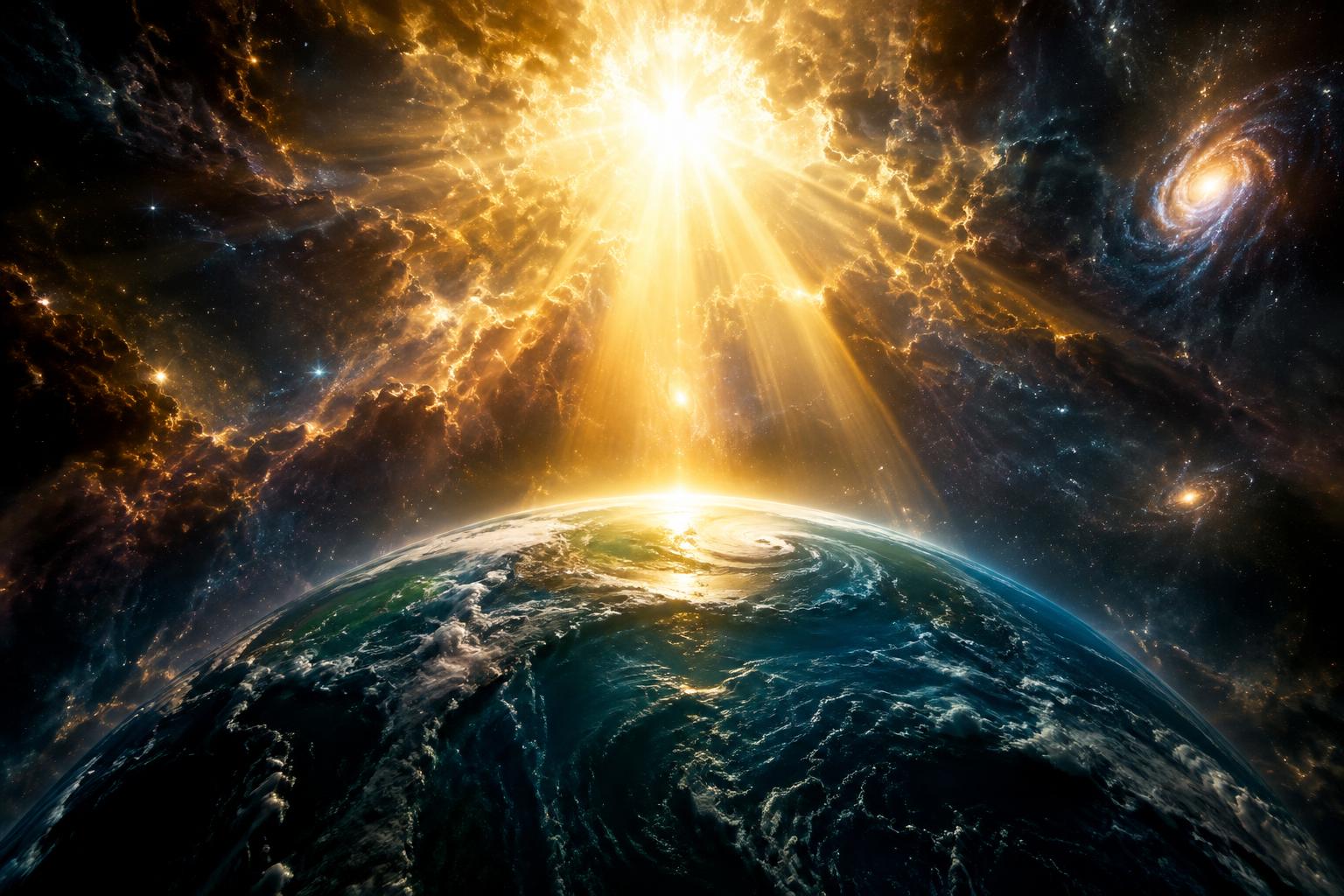
Before Genesis says a single word about light, land or living things, it opens with four words that hold everything together: "In the beginning, God." The Bible doesn't try to prove that God exists. It simply starts with Him. This study walks through the first verse slowly, the way an ancient Hebrew reader would have, and lets the rest of Scripture shed light on it.
The Silent Preacher: Psalm 19
Long before anyone opened a scroll, the sky was already preaching. "The heavens declare the glory of God; and the firmament shows His handiwork. Day unto day utters speech, and night unto night reveals knowledge" (Psalm 19:1-2). David adds something odd: "There is no speech nor language where their voice is not heard" (Psalm 19:3). The stars have no words, yet "their line has gone out through all the earth" (Psalm 19:4).
This looks like a contradiction. How can something without a voice be heard everywhere? The answer is that creation speaks in a language older than Hebrew or Tamil. Every person under the sky, in every century, gets the same sermon: Someone made this. Paul says the same thing in Romans 1:20. Creation leaves no one without a witness.
The Circle on the Face of the Deep
Scripture says some striking things about the shape of the world. "It is He who sits above the circle of the earth, and its inhabitants are like grasshoppers" (Isaiah 40:22). Wisdom, speaking in Proverbs, says: "When He prepared the heavens, I was there, when He drew a circle on the face of the deep" (Proverbs 8:27).
The Hebrew word here is chug, a circle or a curved boundary. Webster's old dictionary defines the horizon as "a great circle of the sphere, dividing the world into two parts or hemispheres; the upper which is visible, and the lower which is hid." That is exactly the picture Proverbs paints. Standing anywhere on earth, you see a circle around you where sky meets sea. God marked that line.
Isaiah 45:18 adds the reason behind it: God "formed the earth and made it... He did not create it in vain, He formed it to be inhabited." The earth isn't a cosmic accident drifting in the dark. It was shaped on purpose, as a home.

"In the Beginning, God": The One Who Needs Nothing
The Tamil Bible reads: Aathiyilae Devan vaanaththaiyum boomiyaiyum sirushtiththaar. In English: "In the beginning God created the heavens and the earth" (Genesis 1:1). Every major translation, from the King James to the NIV, says the same thing. The verse is simple, but the first phrase is enormous.
Notice that the beginning was the beginning of creation, not the beginning of God. "Before the mountains were brought forth, or ever You had formed the earth and the world, even from everlasting to everlasting, You are God" (Psalm 90:2). God has no starting point. Theologians call this His self-existence: He depends on nothing and no one.
Jesus said the same thing about Himself: "For as the Father has life in Himself, so He has granted the Son to have life in Himself" (John 5:26). The Amplified Bible puts it plainly: the Father is "self-existent," and so is the Son. Everything else that lives borrows its life. God alone owns His.
Three Hebrew Words Worth Knowing
Genesis 1:1 in Hebrew is only seven words, but three of them carry a lot of weight.
Bereshit means "in the beginning." It marks the start of time itself. Before this moment there was no "before." Time, space and matter all appear together in this one verse: the beginning (time), the heavens (space), and the earth (matter).
Elohim is the word for God. It has a plural ending, yet it takes a singular verb, bara, "He created." One God, but more than a simple single. A few verses later God says, "Let Us make man in Our image" (Genesis 1:26). The first page of the Bible already hints at what the New Testament reveals: Father, Son and Holy Spirit.
Bara means "created." In the Old Testament this verb is used only with God as its subject. People make things out of other things. Only God bara: He brings things into being out of nothing.
A Drop in a Bucket
Modern astronomy measures the universe in light years. Light covers about 300,000 kilometres every second. In one day it travels around 26 billion kilometres. Galaxies are separated by millions of light years, and there are more of them than anyone can count.
Next to all that, Isaiah gives us God's view: "Behold, the nations are as a drop in a bucket, and are counted as the small dust on the scales" (Isaiah 40:15). The point isn't that we don't matter. The point is that the God who made all of this is far greater than all of this. And yet this same God bends down to name each star (Psalm 147:4) and to count the hairs on our heads (Matthew 10:30).
The Architect at His Side
Who was actually doing the creating? The New Testament gives a clear answer. "In the beginning was the Word, and the Word was with God, and the Word was God... All things were made through Him" (John 1:1-3). Paul writes that Christ "is the image of the invisible God, the firstborn over all creation. For by Him all things were created, that are in heaven and that are on earth, visible and invisible" (Colossians 1:15-16).
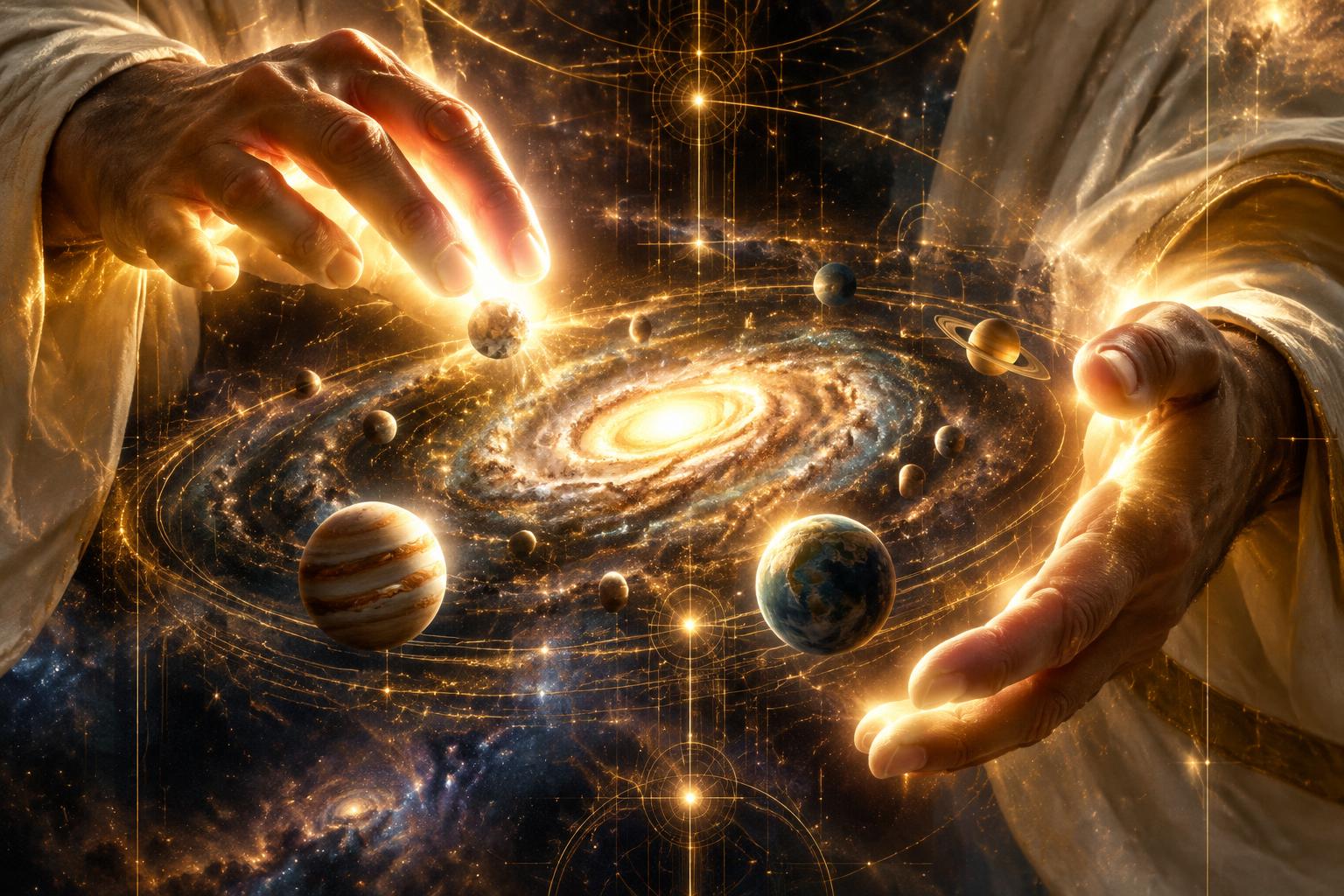
Now go back to Proverbs 8, where Wisdom speaks: "Then I was beside Him as a master craftsman, and I was daily His delight, rejoicing always before Him" (Proverbs 8:30). The Hebrew word is amon. Translations render it "master craftsman," "master workman," "skilled craftsman," and even "architect." Many Bible teachers see here a portrait of the Son before His birth in Bethlehem: the One who drew up the plans of the universe, and who delighted in it.
This means the hands that shaped the galaxies are the same hands that were later nailed to a cross. The Creator came into His own creation to rescue it.
The Spirit Hovering Over the Waters
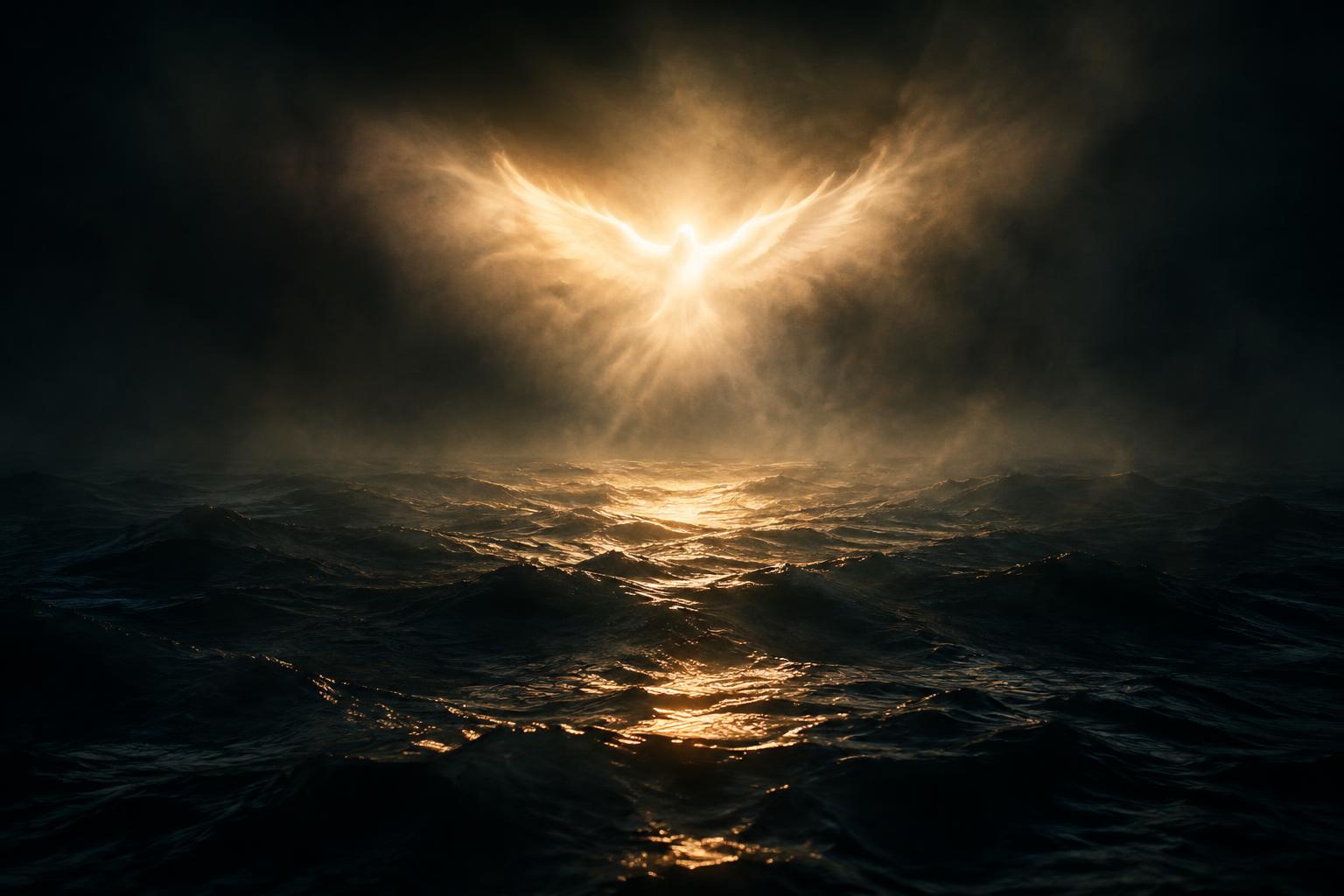
Genesis 1:2 sets the scene for the six days: "The earth was without form, and void; and darkness was on the face of the deep. And the Spirit of God was hovering over the face of the waters."
"Without form and void" is tohu va-vohu in Hebrew: empty, shapeless, unfinished. But the Spirit was there, hovering like a bird over its nest (the same word appears in Deuteronomy 32:11 for an eagle over its young). Before a single word of "Let there be light," the Spirit was already present, ready to bring order out of chaos and life out of emptiness.
He still does this. Many lives today feel like Genesis 1:2: formless, dark, empty. The same Spirit hovers over them, waiting for the Word to speak light.
Why This Matters
Genesis 1:1 answers the biggest questions anyone can ask. Where did everything come from? God. Who is God? The eternal, self-existent One, Father, Son and Spirit. Why are we here? Because He formed the earth to be inhabited, and He did not make it in vain.
The universe isn't a cosmic accident, and neither are you. The Architect who drew the circle on the deep knows your name.