 Cedar Biblical
Decoding · 6 min read
Decoding the Crucifixion Earthquake: Why Did the Ground Shake When Christ Died?
At the cross of Christ, eternity collided with human history: an earthquake that split the rocks and a temple veil torn from top to bottom, opening the way into the presence of God.
A Life of Unassuming Majesty
The earthly journey of our Lord Jesus Christ was marked from its beginning by profound simplicity. When the Creator entered His own world, He did not arrive in an imperial palace or surrounded by royal fanfare. He was born in the lowliest of circumstances, laid in a feeding trough, and visited by humble shepherds keeping watch over their flocks by night.
This humility defined His entire earthly ministry. Jesus walked among ordinary men and women, traveling on foot across dusty Galilean roads, possessing no place of His own to lay His head. Even when performing earth-shattering miracles—restoring sight to the blind, cleansing lepers, calming violent tempests, and calling the dead from their tombs—He did so without worldly ostentation. His deeds were magnificent, yet His demeanour remained quiet, gentle, and utterly selfless.
Yet this life of unassuming grace was moving deliberately toward an appointed hour. Every step of Christ’s earthly pilgrimage was directed toward an altar of supreme sacrifice, where the eternal plan of redemption would culminate in a display of divine love that shook creation itself.
The Crucible of Golgotha
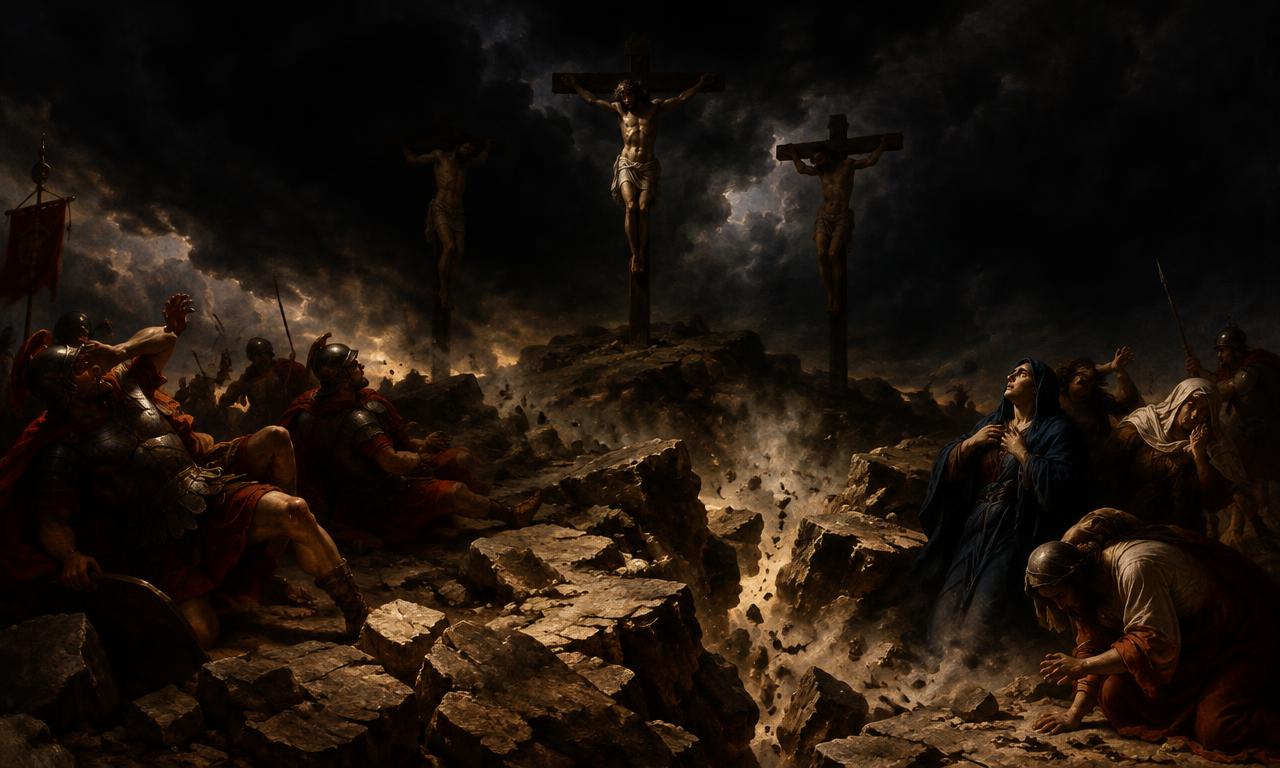
At Mount Calvary, the Lord of glory hung suspended between heaven and earth. Stripped of His garments and exposed to ruthless public scorn, Jesus endured agony beyond human comprehension. The prophetic portrait of Isaiah 53 was fulfilled in real time before mocking crowds: His sacred flesh was bruised, beaten, and pierced; His blood poured out as an offering for transgressions He did not commit.
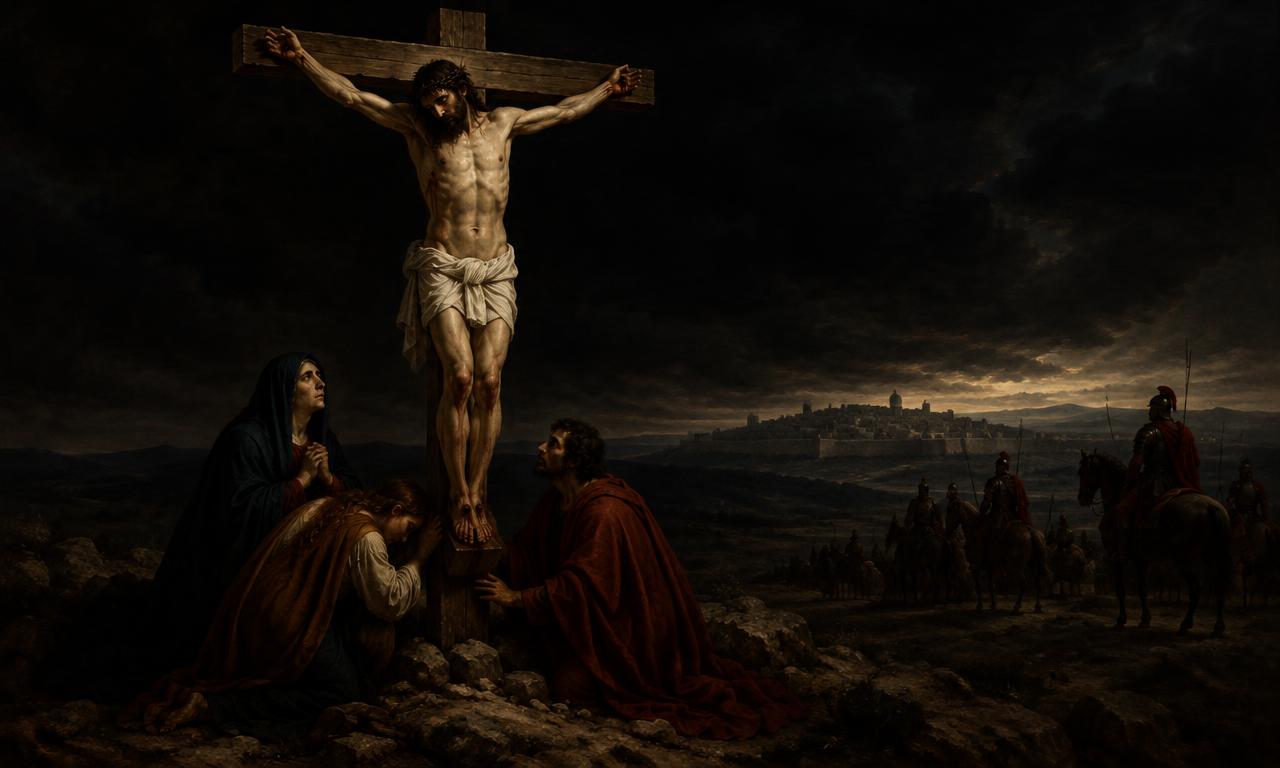
Amid such excruciating torment, Christ’s soul was anchored in dual love. First, He harbored an unfathomable love for the Father, submitting perfectly to the righteous decree that divine justice demanded. Second, He was driven by an unquenchable love for His spiritual body, the Church. He saw ahead to those who would believe without seeing, bearing the shame for the joy set before Him.
Then came the climactic moment. Having drunk the cup of suffering to its bitter dregs, Jesus cried out with a loud voice, "Father, into your hands I commit my spirit," and breathed His last. At that very second, two miraculous events disrupted the natural world, forever bridging the divide between God and man.
The Roar of Heaven: The Earth Shakes
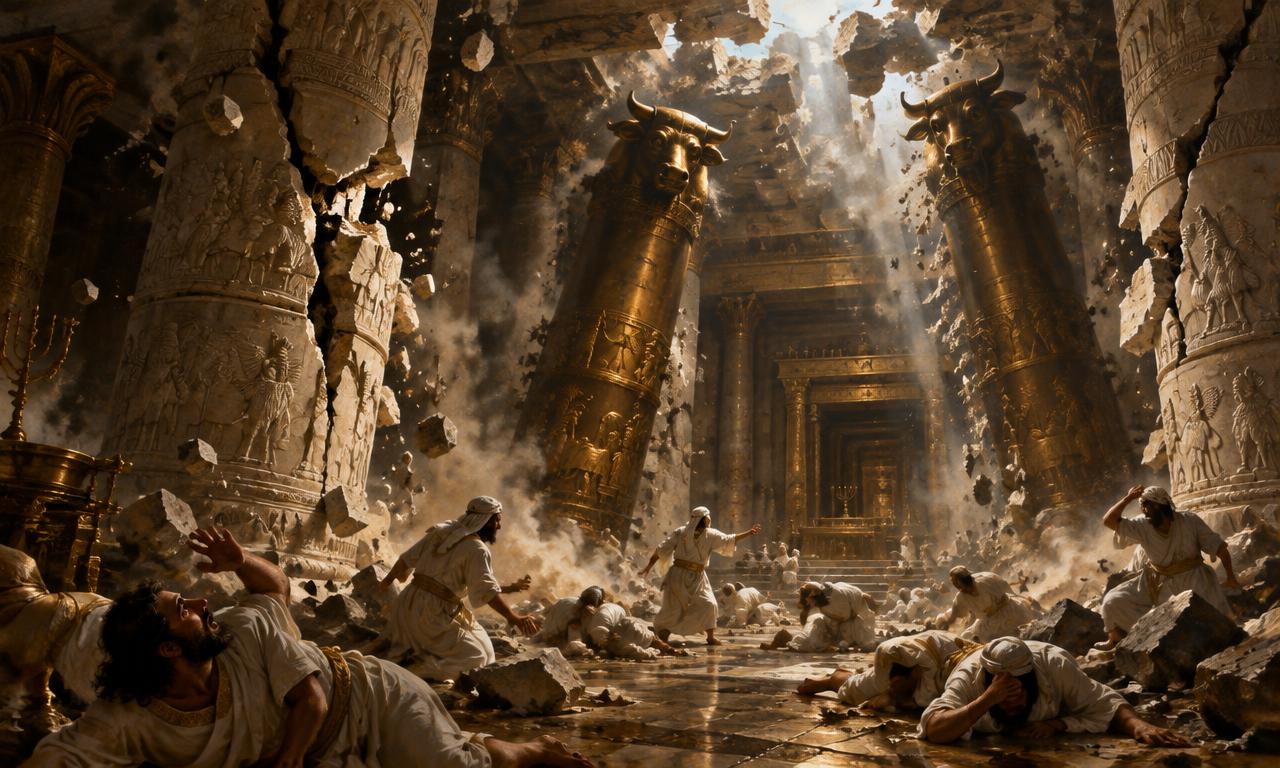
Matthew 27:51 records that the moment Jesus yielded His spirit, "the earth shook, and the rocks were split." The tremors were so violent that the foundations of the land trembled, shattering solid crags around Jerusalem.
Why did creation heave in such violent convulsions? Consider the unfathomable posture of God the Father throughout those final hours. For hours, as Christ bore the sin of the world and cried out, "My God, My God, why have You forsaken Me?", heaven maintained solemn silence. Divine justice demanded that Christ stand alone in the sinner's place.
Yet, when the sacrifice was accomplished and the Son poured out His soul unto death, the Father's restrained majesty and grief shook the planet. It was as though the sovereign Creator could no longer contain the testimony of His heart. Through that mighty earthquake, God thundered what human rulers refused to acknowledge. Hardened Roman soldiers, witnessing the trembling earth and split rocks, were seized with terror and declared, "Truly this was the Son of God!"
Shadows of the Sanctuary: The Ancient Pattern
Simultaneously, within the walled city of Jerusalem, an even more profound revelation was taking place inside the temple courts. To grasp what transpired, we must look back to the shadows given in the wilderness tabernacle and later enshrined in Solomon’s and Herod’s temples.
The sanctuary was divided into distinct realms: the Outer Court, the Holy Place, and the Most Holy Place. Outside stood the brazen altar of sacrifice and the laver of cleansing. Inside the sanctuary stood the golden lampstand, the table of showbread, and the altar of incense. But beyond these lay the inner sanctum—the Holy of Holies.
The Most Holy Place housed the Ark of the Covenant, overshadowed by the cherubim above the mercy seat. It was the earthly shadow of the heavenly reality, representing the unapproachable throne room of Almighty God. No common Israelite could ever look upon it. Even ordinary priests ministering daily at the golden altar were strictly barred from entering.
Only the High Priest, once a year on the Day of Atonement, dared cross that threshold, bearing sacrificial blood to make atonement for the people. A massive, intricately woven curtain—standing dozens of feet tall and woven with thick, durable fabric—hung as a formidable barrier. It was a perpetual sermon in woven thread, warning fallen humanity: You cannot enter. God is holy, and sin bars your way.
The Veil Rent in Two
At the precise instant Jesus expired on the cross outside the city gates, God struck the temple’s sacred curtain.
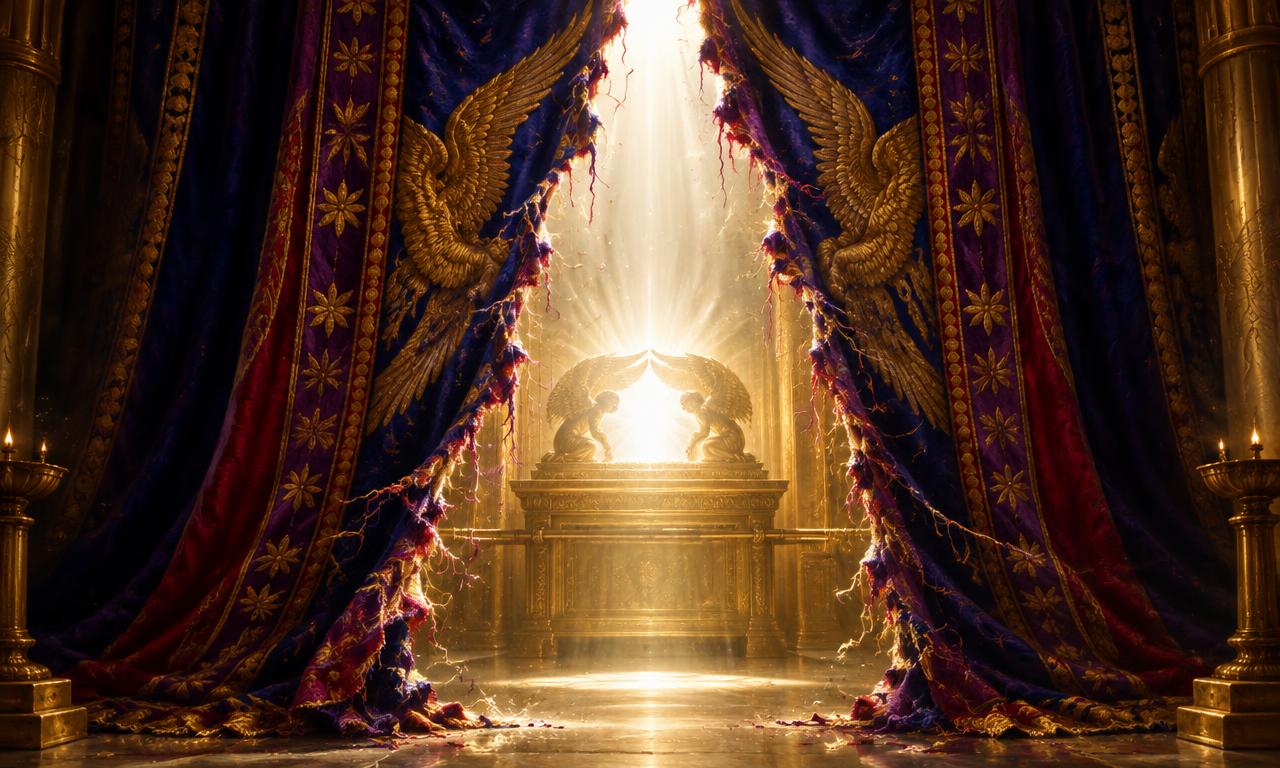
Matthew records the stunning detail: "Then, behold, the veil of the temple was torn in two from top to bottom." It did not fray from the bottom up, as though human hands had seized it. It tore from the top down, seized by the invisible hands of Almighty God from the heavens.
By tearing that veil from above, the Father declared that the era of shadows, animal sacrifices, and earthly mediation was over. Christ’s broken body was the true veil (Hebrews 10:20). When His flesh was torn on the cross, the ancient barrier dividing sinful humanity from the holy presence of God was forever abolished.
No longer would access to God be restricted to an earthly high priest once a year under clouds of incense and fear of sudden death. The way was thrown wide open for all who are cleansed by the precious blood of the Lamb.
A Living Way into the Heavens
Jesus Christ came as our eternal High Priest after the order of Melchizedek. He did not enter a sanctuary made with human hands, but entered heaven itself, carrying His own blood as an everlasting atonement.
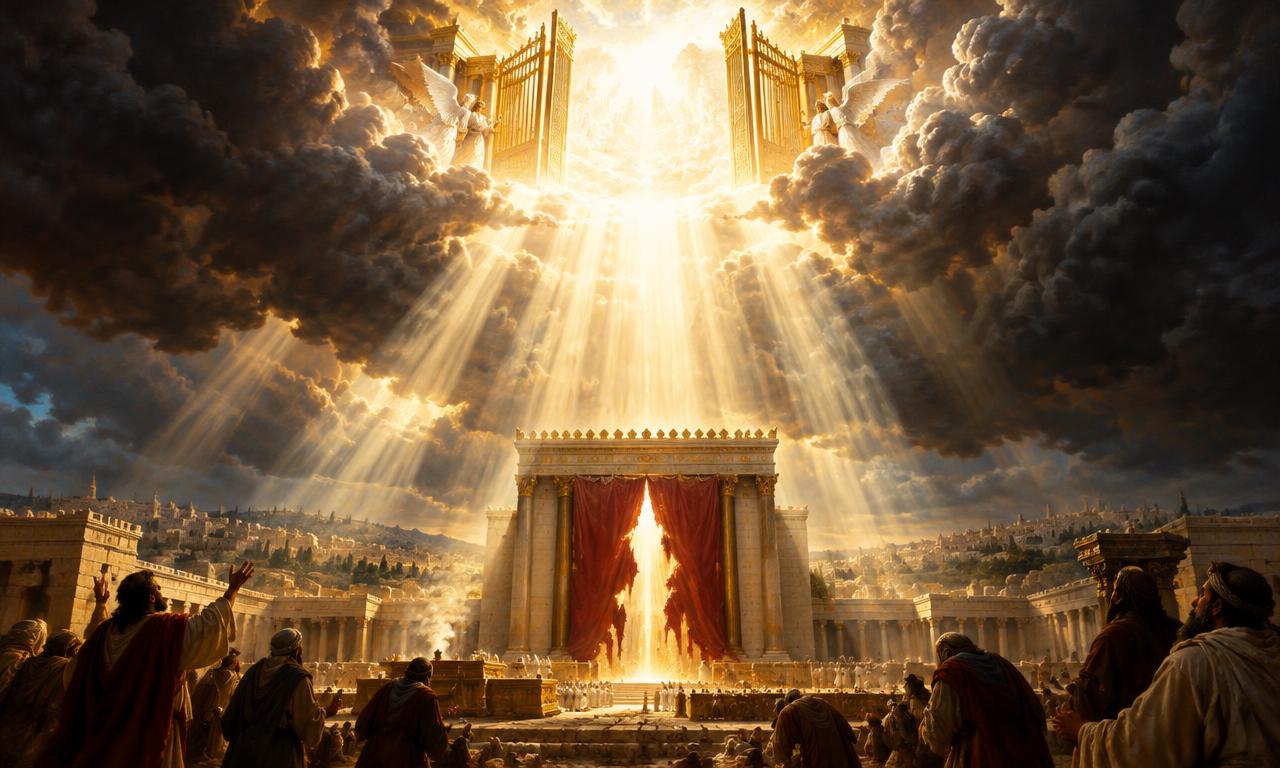
The Epistle to the Hebrews tells us that we now have an anchor for the soul, both sure and steadfast, which enters the Presence behind the veil, where the forerunner has entered for us (Hebrews 6:19–20). Christ has traversed the veil of death and entered the heavenly sanctuary, taking His seat at the right hand of the Majesty on high.
Because of this accomplished redemption, the invitation of grace is extended to us: "Let us therefore come boldly to the throne of grace, that we may obtain mercy and find grace to help in time of need" (Hebrews 4:16). We are no longer outcasts dwelling in the spiritual leprosy of guilt and self-righteousness. Christ suffered outside the camp so that He might sanctify us with His own blood.
As we reflect upon His cross, the quaking earth, and the torn veil, let us discard all reliance on our own merit. Let us draw near with sincere hearts, full assurance of faith, and profound awe, knowing that the way into the very presence of our Heavenly Father stands open forever through Jesus Christ our Lord.