 Cedar Biblical
Decoding · 8 min read
Between the Testaments: The 400 Silent Years and the Unseen Hand of God
From Malachi to Matthew: Persia, Alexander, Antiochus IV, the Maccabees and Rome, and how Daniel's prophecies unfolded while heaven seemed silent.
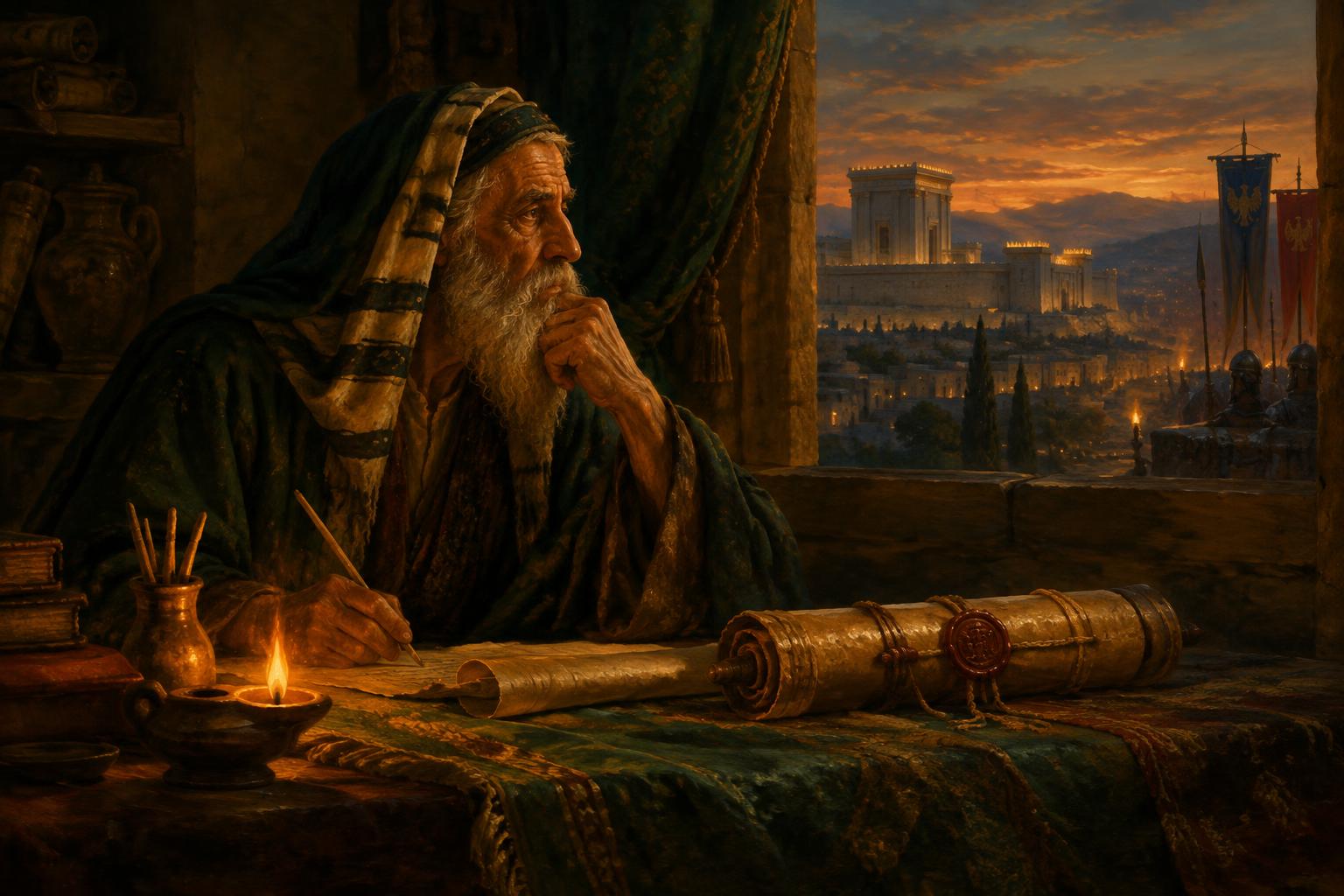
Turn the page from Malachi to Matthew and you cross, in a single breath, roughly four hundred years. The prophet's last words promise that Elijah will come "before the coming of the great and dreadful day of the LORD" (Malachi 4:5). The next page opens with a genealogy and a manger. Between them lies a silence that is not empty at all.
At first glance the gap seems like a contradiction: if God spoke so often through the prophets, why the long quiet? Careful study shows that the silence of new prophetic writing was filled with the steady fulfilment of prophecy already given. History itself became the commentary on Daniel.
The Bible Is a Book of History
One of Scripture's unique marks is that it is rooted in real kingdoms, real kings, and real dates. Daniel stands at the hinge. In Daniel 2 and Daniel 7 the prophet sees four world empires in succession: Babylon, then Medo-Persia, then Greece, then a fourth, terrible power commonly identified with Rome. When the Jews returned from exile under Cyrus (Ezra 1:1–3), they lived under the second of those kingdoms, waiting.
Persia and the Return
Daniel 11:1–2 is set "in the first year of Darius the Mede" and announces three more Persian kings, then a fourth "far richer than they all," who would stir up all against the realm of Grecia. The Persian period gave the Jews their rebuilt Temple (Ezra 6:15), the restored walls under Nehemiah, and the ministry of Malachi, who rebuked careless priests offering blemished sacrifices (Malachi 1:6–8). Then the prophetic voice falls quiet.
Alexander and the Divided Kingdom
"A mighty king shall stand up, that shall rule with great dominion" (Daniel 11:3). Alexander of Macedon swept across the Persian world in little more than a decade and died young in 323 BC. The very next verse reads like a summary of what followed: "his kingdom shall be broken, and shall be divided toward the four winds of heaven; and not to his posterity" (Daniel 11:4). His generals carved up the empire, and none of his sons ruled it.
Two of those successor dynasties matter most for Israel: the Ptolemies in Egypt (the "king of the south") and the Seleucids in Syria (the "king of the north"). Judea sat between them like a bridge two armies kept crossing. Under the Ptolemies the Hebrew Scriptures were translated into Greek, the Septuagint, a version the apostles would later quote across the Mediterranean.
Hellenism and a Divided People
Greek language, games, and philosophy pressed into Jewish life. Some families clung tightly to the commandments; others thought it wise to blend with the surrounding culture. This tension produced the parties we meet in the Gospels. The Pharisees grew from those zealous for the Law and its traditions; the Sadducees, largely from the priestly aristocracy, accommodated to power and denied the resurrection (Matthew 22:23; Acts 23:8).
Antiochus IV and the Abomination
The crisis came under the Seleucid king Antiochus IV Epiphanes. Around 167 BC he outlawed circumcision and Sabbath-keeping, set up an altar to Zeus in the Temple, and sacrificed swine upon it. Many readers see this foreshadowed in Daniel 11:31: "they shall pollute the sanctuary of strength... and they shall place the abomination that maketh desolate." Jesus would later speak of an abomination still to come (Matthew 24:15), showing that this history was itself a pattern.
The Maccabean Revolt
In the village of Modein an aged priest, Mattathias, refused to offer a pagan sacrifice and struck down the man who did. He fled to the hills with his sons, and his son Judas, called Maccabeus ("the hammer"), led a guerrilla war. In 164 BC the Temple was cleansed and rededicated, an event remembered at the Feast of Dedication, which Jesus Himself attended (John 10:22–23).
From the Hasmoneans to Rome
The Maccabees' descendants, the Hasmoneans, became priest-kings, but independence decayed into rivalry. Pharisees and Sadducees, divided in doctrine, could still unite against a common annoyance, and quarrelling factions appealed to Rome. In 63 BC the general Pompey entered Jerusalem. Rome later set the Idumean Herod on the throne, and Herod rebuilt the Temple into the splendid structure the disciples admired (Mark 13:1). The fourth kingdom of Daniel had arrived.
The Stage Set for the Messiah
"When the fulness of the time was come, God sent forth his Son" (Galatians 4:4). Look at what those centuries had prepared: a common Greek language and a Greek Old Testament; Roman roads and Roman peace; synagogues scattered among the nations; and a people sharply watching for a Deliverer. Even the opponents Jesus would face, the scribes, Pharisees, Sadducees, and Herodians, had been formed in those years.
Why the Silence Still Speaks
Malachi closed with a warning to priests who had grown careless, and a promise that the Lord would "purify the sons of Levi" (Malachi 3:3). The intertestamental years show what happens when God's people forget to consider His glory (Malachi 2:2). Yet they also show God keeping every word He had spoken, king by king, through Daniel. If He kept the history of empires in His hand, He keeps our quiet seasons too. Silence from heaven is never absence. It is preparation.
Note: dates and the identification of specific rulers in Daniel 11 follow common historical scholarship; readers may weigh differing interpretations.