 Cedar Biblical
Decoding · 7 min read
Decoding the Battle of Armageddon: Prophecy, the Drying Euphrates, and the Final Gathering
Revelation 16 unpacked: the drying of the Euphrates, the three unclean spirits, the gathering of the kings, and why Christ calls us to keep our garments.
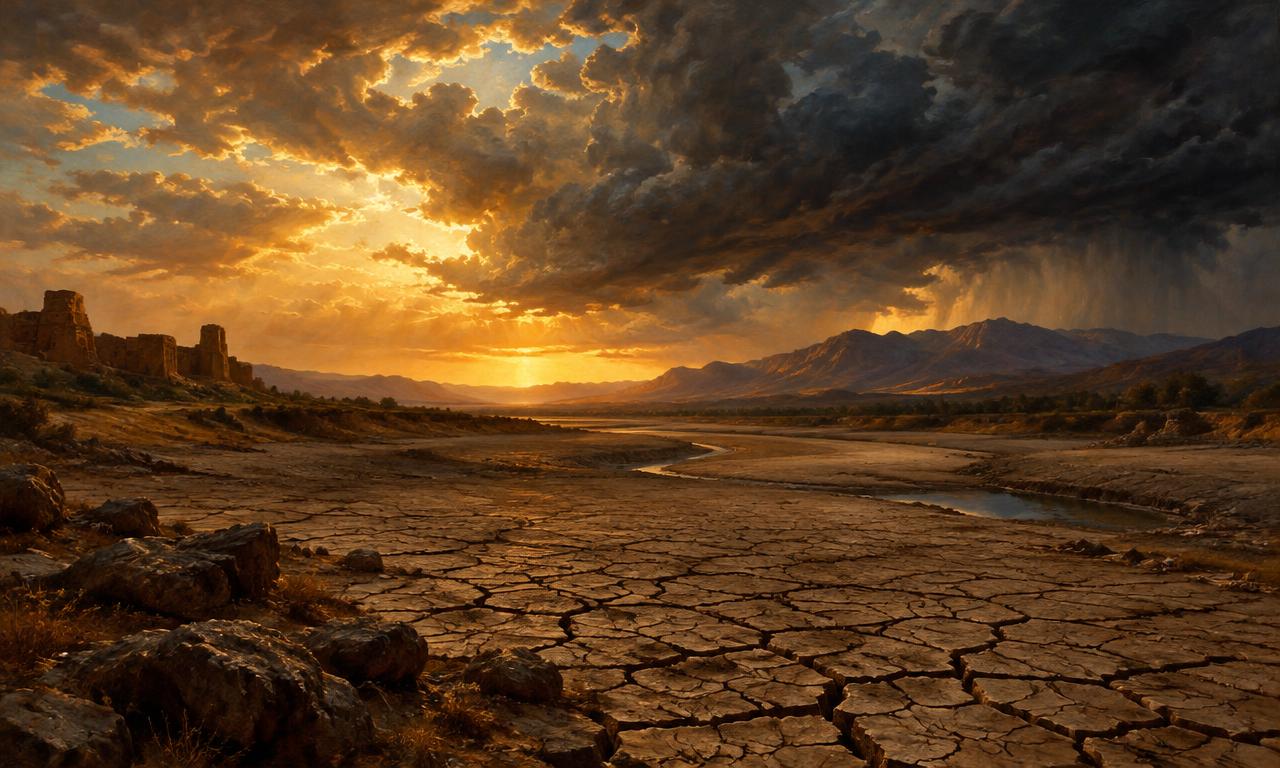
Few passages in the sacred canon have captured human imagination or stirred deeper apprehension than the sixteenth chapter of Revelation, where the kings of the whole world are gathered to the battle of that great day of God Almighty at Armageddon. To the casual reader, the passage presents formidable difficulties. It appears to depict a chaotic, literal clash of military hardware upon a small hillside in northern Palestine, an event that seems at once geographically improbable and spiritually bewildering. Furthermore, the accompanying visions of frogs issuing from monstrous mouths, drying rivers, and universal earthquakes can easily obscure the pastoral and prophetic heart of the text. When examined through careful, contextual study, however, these apparent perplexities dissolve into a coherent portrait of divine providence concluding one dispensation and inaugurating another.
Historical Type and Prophetic Substance
The first difficulty confronting the student of prophecy is the literal versus the symbolic identity of Armageddon itself. The word points historically to the Hill of Megiddo, an ancient fortress overlooking the Plain of Esdraelon. This valley served as the blood-soaked theater for Israel’s most pivotal engagements, from the rout of the Midianites under Gideon to the tragic demise of King Josiah. Yet, if one insists upon a strictly geographical fulfillment, the vision collapses under its own weight. A narrow Palestinian pass could hardly accommodate the marshaled resources, political factions, and millions of combatants described across global prophecy.
The resolution lies in understanding the typological nature of Biblical narrative. The battles fought around Megiddo were historic shadows. When Gideon and his small band discomfited the host of Midian without human weaponry, it foreshadowed the divine deliverance of humanity from bondage. Conversely, the downfall of apostate monarchs at Megiddo illustrated the inevitable collapse of human governance separated from righteousness. When John invokes Armageddon in Revelation, he does not summon modern states to a literal trench in the Middle East. Rather, he employs the Mount of Destruction as a vivid emblem for the climactic controversy between truth and error, divine righteousness and institutional self-preservation, which marks the closing days of the present Gospel age.
The Dilemma of Human Progress and Moral Despair
A second and more poignant difficulty concerns the moral trajectory of our world. Scripture describes the close of the age as a period marked by both the increase of light and the unprecedented accumulation of trouble. Daniel recorded that in the time of the end, many would run to and fro, and knowledge would be increased, yet simultaneously there would arise a time of trouble such as never was since there was a nation. For many thinkers, this presents an irreconcilable contradiction. How could an era blessed with unprecedented enlightenment, swift transit, widespread literacy, and immense industrial wealth culminate in destructive catastrophe rather than a golden age of human brotherhood?
A deeper study of the human condition resolves this apparent paradox. The expansion of knowledge, when bestowed upon unregenerate hearts, does not produce contentment; it inflames ambition, multiplies desires, and breeds covetousness. Over the past century, material output and technological breakthroughs have multiplied thousands of times over, yet the distribution of these blessings has created deepening friction between capital and labor, and fierce commercial rivalries among nations. The very wealth generated by human ingenuity becomes a source of dread, as governments burden future generations with unpayable debts and arm themselves out of fear that a neighbor might seize their commercial avenues. God permits human knowledge to crest so that mankind might demonstrate its own incapacity to establish permanent peace apart from its Creator. The increase of knowledge without divine grace naturally accelerates the crisis of Armageddon.
Separating Religious Systems from Individual Souls
Perhaps the most sensitive difficulty within apocalyptic exposition involves the severe language directed against religious and civil institutions. The Apocalypse speaks of the Dragon, the Beast, and the False Prophet, using stark imagery to describe entities that claim divine sanction. Sincere students often recoil from such interpretations, wondering how an open Bible can speak so sternly of traditions and church federations that contain many devout, sacrificial, and godly men and women.
Careful exegesis resolves this tension by rigorously separating corporate systems from individual believers. God’s prophetic arraignment is directed entirely against human systems, ecclesiastical hierarchies, and doctrinal compromises, never against the personal integrity of individual disciples found within them. The Beast represents an earthly, imperial church system that long ago claimed the right to rule the nations in Christ’s stead, confusing temporal power with the spiritual kingdom. Similarly, the Image of the Beast and the False Prophet portray modern federations of churches that, fearful of losing institutional authority in a changing culture, consolidate their influence and lean upon the arm of the state for security. Throughout history, the true body of Christ has remained a little flock, scattered across various folds and often overlooked by the grand pageantry of ecumenism. Prophecy unmasks the folly of institutions that seek to maintain order by compromising fundamental truths, even while the Lord lovingly preserves His consecrated people who walk humbly in their personal faith.
The Croaking Spirits of Self-Preservation
Revelation describes three unclean spirits like frogs proceeding from the mouths of these consolidated powers to gather the rulers of the earth. Here again, the bizarre symbol poses an interpretative challenge until one observes the behavior of the emblem itself. A frog is characterized by its pompous appearance, puffing itself up to appear formidable, while emitting a repetitive, mournful croak.
In the language of spiritual symbols, a spirit denotes a doctrine or prevailing mindset. The frog-like spirits represent boastful, fear-driven arguments uttered in unison by civil rulers, traditional religious hierarchies, and ecclesiastical federations. As the foundations of the old order begin to tremble under social and economic strain, each of these systems raises the cry of absolute self-preservation. Their united voice insists that any departure from ancient arrangements will precipitate immediate anarchy and ruin. Under the banner of political expediency—much like the reasoning of Caiaphas before the crucifixion—they counsel that individual liberty, truth, and conscience must be sacrificed to protect the existing order. It is this pervasive propaganda of fear, demanding unquestioning conformity to traditional human arrangements, that ultimately gathers the financial, political, and religious potentates into an intractable conflict against the incoming reign of righteousness.
The Believer’s Posture in the Day of Trouble
A final difficulty lies in determining the proper conduct of the Christian during this hour of global shaking. If the forces of society are dividing into hostile camps—the entrenched institutions on one side and an impoverished, agitated populace on the other—where does the disciple of Christ stand? It might seem natural to enlist on the side of social agitation, especially since Scripture indicates that God overrules the cries of the oppressed to break the teeth of injustice.
Yet the Word of God assigns the consecrated believer a very different calling. The followers of Jesus are not called to the barricades of social revolution, nor are they called to shore up corrupt and decaying institutions. The saints are neither anarchists nor apologists for oppression. Their duty is to keep their spiritual garments unspotted, their lamps trimmed, and their hearts anchored in patient trust. They recognize that the storm of Armageddon is the divine plowshare preparing the stubborn soil of humanity for the seed of the Kingdom. When human schemes have utterly exhausted themselves, and the pride of earthly dominion is laid low in the dust, the Lord Himself will intervene. The extremity of man becomes the opportunity of God, ushering in the true desire of all nations through the righteous and peaceful administration of the Messianic Kingdom.